

Civilizations rarely collapse all at once. More often they drift.
Systems weaken slowly. Incentives begin to distort. Leaders hesitate to confront the deeper causes of growing problems.
People work tirelessly to treat the symptoms. Few stop to ask what is happening upstream. There is a story that captures this dynamic perfectly.
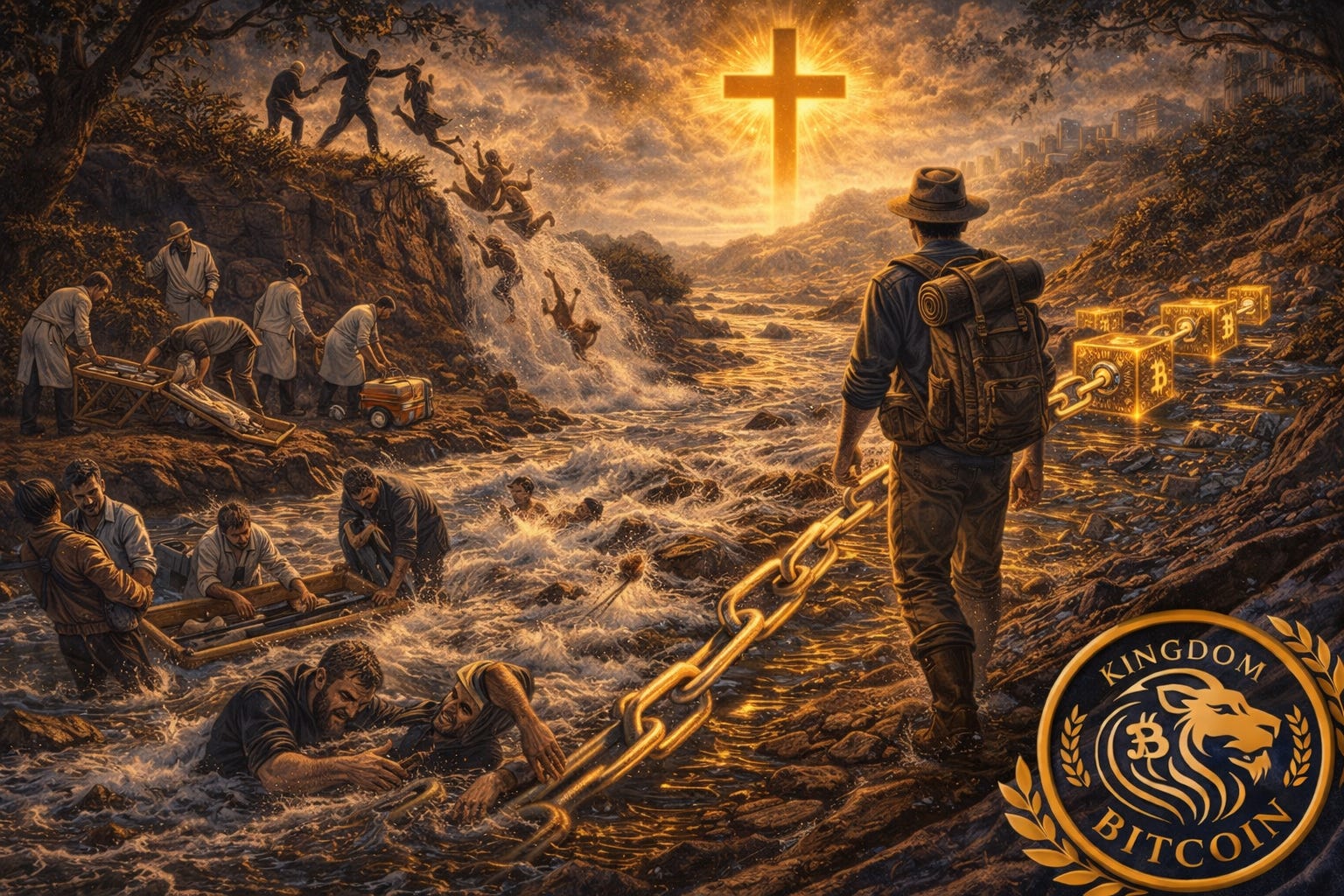
A small village sits beside a wide river. One afternoon the villagers hear a scream for help. They run to the water’s edge and see a man struggling in the current. They pull him out just in time.
The next day it happens again. This time there are two people in the river. Soon it becomes four. Then eight. Then more.
The village organizes itself around rescue. Some bring ropes. Others build stretchers. Doctors arrive. Volunteers work tirelessly along the riverbank pulling people from the water.
The effort is noble however after several days, one villager quietly sets down his rope and begins walking upstream. The others shout after him.
“Where are you going? We need you here!”
He replies: “Someone needs to find out who keeps pushing people into the river.”
Every healthy civilization eventually needs people willing to walk upstream. That story explains much of modern society.
We have become remarkably skilled at responding to downstream crises. Charities expand. Government programs multiply. Emergency interventions grow more sophisticated each year.
Many of these efforts are compassionate and necessary. Too often we fail to examine the upstream systems creating the problem in the first place.
Money is one of those upstream systems.
When money loses integrity, the consequences ripple quietly through everything else. Housing becomes increasingly unaffordable. Savings lose purchasing power. Young families find it harder to build stability.
The symptoms appear everywhere. The average first-time homebuyer in the United States is now over forty years old. Student debt burdens many young workers before their careers even begin. Asset prices inflate faster than wages can keep pace.
We debate these outcomes constantly. Politics dominates the conversation. Policies are proposed. Programs expand. Yet the deeper question remains upstream.
What happens when the measuring stick of value itself becomes unstable?
When currency can be expanded without meaningful restraint, purchasing power quietly shifts across the economy. Assets rise faster than incomes. The ladder of economic mobility moves farther away from the next generation.
The result is frustration. Sometimes resentment leading to possible despair. History reminds us of something equally important. Human progress has been extraordinary.
Over the last century global poverty has collapsed. Life expectancy has expanded across nearly every continent. Literacy has spread to billions of people who once lived without access to education.
Human creativity is one of God’s great gifts to civilization. The challenge is ensuring that the systems guiding that creativity remain honest.
This is why monetary integrity matters so deeply.
Money is not merely a tool of commerce. It is the measuring instrument of economic cooperation. It allows millions of strangers to coordinate effort, exchange value, and build prosperity together.
When the measurement becomes unstable, cooperation begins to weaken. The Founding Fathers understood this danger well.
They debated money fiercely because they understood that whoever governs the measuring stick eventually shapes the marketplace itself. A free society requires more than liberty. It requires systems disciplined enough to preserve trust.
Scripture speaks clearly about this principle.
“Shall I acquit a man with dishonest scales and with a bag of deceitful weights?”
- Micah 6:11
This language is not economic jargon. It is moral language.
Dishonest measurement distorts justice. It rewards manipulation instead of productivity. It quietly erodes the dignity of honest work.
This is where bitcoin enters the conversation.
Bitcoin introduces a financial system governed by transparent rules rather than discretionary expansion. Its supply is known. Its issuance is predictable. Verification occurs on a public ledger that anyone can examine.
No central authority can quietly alter the record. In a world where institutional trust often weakens, systems designed around transparency become increasingly valuable.
Bitcoin does not eliminate every problem in society. Bitcoin strengthens something upstream and when upstream systems improve, downstream suffering often begins to decline.
Christians understand something fundamental about human institutions. Sin distorts them. Pride corrupts them. Power concentrates them while truth can reform them.
The Bible calls for honest weights and measures because honest measurement protects human dignity. It protects workers. It protects savers. It protects the fragile trust that allows civilization to function.
Bitcoin does not replace moral leadership. It embeds a form of structural discipline into money itself. Sometimes compassion means pulling people from the river or building stronger rescue systems. Yet sometimes compassion requires something even harder meaning one needs to walk upstream to examine systems. Walking upstream to restore honest measurement and rebuild trust because when the upstream systems are healthy, far fewer people end up in the river.
Prayer 🙏🌊
Dear Father,
Give us wisdom to see the systems shaping our world. Help us care for those suffering downstream while also seeking truth upstream.
Protect our hearts from cynicism and despair. Remind us that You are still working through human creativity, stewardship, and courage. Teach us to build systems that reflect honesty, justice, and dignity. And guide us to serve others faithfully in whatever calling You have placed before us.
In Jesus’ name, Amen. 🙏🌊