

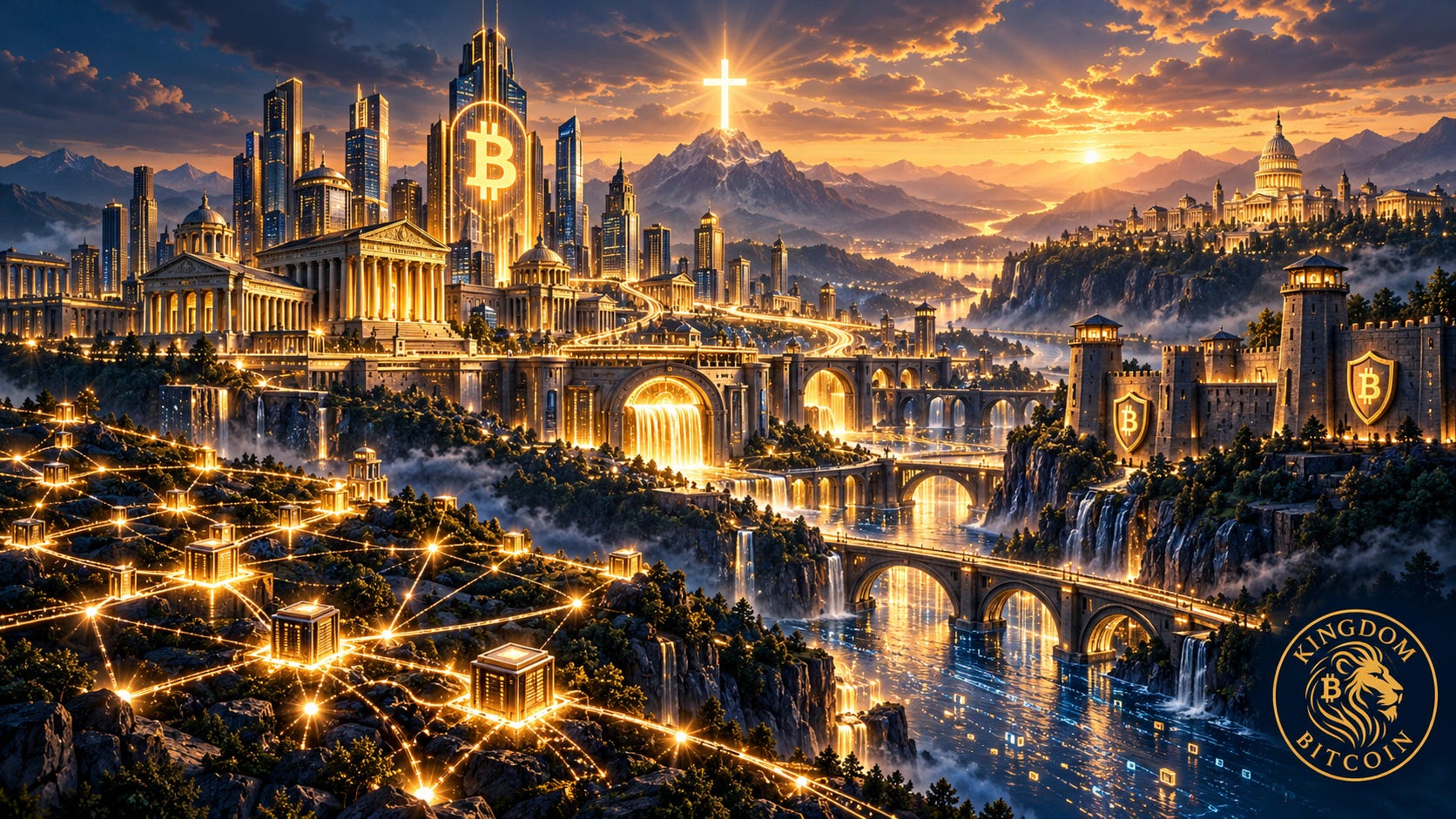
Joseph did not merely predict a famine. He built an institution capable of carrying abundance across time. Genesis 41 says he gathered grain during seven prosperous years so Egypt would have provision when lean years arrived. Wisdom saw danger, stewardship designed the system, and disciplined administration preserved what later saved lives. Institutions can serve human flourishing when responsibility remains visible. Those entrusted with power must remember whom they serve.
That is the lens through which I view Wall Street’s arrival in Bitcoin. The first phase was access through spot Bitcoin ETFs. The next phase is larger: brokerages, banks, custodians, futures markets, and options desks are placing Bitcoin into systems millions use. Wall Street did what Wall Street does best. It built a wrapper, assigned a ticker, attached a fee, and placed Bitcoin beside stocks and bonds. Meaningful progress, yes. Permission to stop thinking, absolutely not.
In 2026, Morgan Stanley launched a Bitcoin ETF at an annual fee of 0.14 percent and expanded spot trading through E*Trade to roughly nine million clients. Charles Schwab began direct cryptocurrency trading, while Merrill broadened adviser access and discussed allocations of roughly 1 to 4 percent. JPMorgan expanded Bitcoin-related research and financing. Coinbase, Anchorage, Galaxy, and banks continued building plumbing. Some are live; others remain announced or pending. Maturity requires knowing the difference between a press release and a functioning product.
By late October, United States spot Bitcoin ETFs held roughly $102 billion, with cumulative net inflows near $57.6 billion. Institutional investors reportedly owned 44.2 percent of ETF Bitcoin by June. Those numbers measure different things. Assets under management move with price and flows. Net inflows measure money entering after withdrawals, while institutional ownership identifies who owns fund shares. A large fund does not prove new demand arrived that week. Sometimes the wrapper simply became more valuable because the asset inside it did.
Bitcoin exposure now comes in several distinct forms. Direct ownership means controlling bitcoin yourself or deliberately choosing a custodian. A spot ETF means owning shares in a trust whose custodian controls the underlying bitcoin. Treasury-company equity means owning a business with management, debt, dilution, expenses, and a Bitcoin strategy. Futures and options create contractual exposure without transferring the asset itself. Many people say they own Bitcoin when they actually own a financial claim whose value depends upon Bitcoin.
That distinction is not an argument against institutions. Joseph’s storehouses mattered because Egypt could not preserve national reserves through good intentions alone. The question is whether the structure makes authority, risk, and accountability understandable. Who holds the keys? Can the investor withdraw actual bitcoin? What happens if the custodian, broker, fund sponsor, or clearing system fails? Access and ownership are related, but they are not identical.
Derivatives reveal how far institutionalization has moved. A futures contract creates an obligation to settle exposure under terms, while an option gives its owner the right, but not the obligation, to buy or sell at specified terms. Professionals use both to hedge, transfer risk, and manage volatility. By mid-October, options represented just under 60 percent of $129 billion in derivatives open interest. ETF options had become a major venue, with BlackRock’s IBIT approaching the scale of leading crypto-native markets. Bitcoin is entering Wall Street’s risk machinery, not merely its product catalog.
Yet one contradiction reveals how incomplete the embrace remains. Under the Basel framework, banks face a 1,250 percent risk weight for direct Bitcoin exposure, making large holdings unattractive. Banks may sell products, custody assets, lend against related securities, and facilitate trading while discouraged from owning much themselves. Wall Street can distribute the meal, design the menu, and charge for the table while regulators prefer that banks avoid eating very much of it. Distribution has advanced faster than conviction.
America has seen this pattern before. In 1792, brokers meeting beneath a buttonwood tree established rules that helped evolve into the New York Stock Exchange. Organized markets connected savings with enterprise and helped finance American growth. They also created intermediaries whose solvency, custody, settlement practices, and incentives mattered. Financial institutions expand freedom when they reduce friction and connect capital with productive opportunity. They become dangerous when complexity hides where the obligation actually lives.
For households, the question is not whether ETFs are good or self-custody is pure. The question is what purpose the asset serves and which responsibility the household can carry. An ETF may fit a retirement account, simplify reporting and allow adviser management. Direct ownership may provide portability, withdrawal, and control unavailable through a fund. Institutional custody may suit someone unprepared to secure keys. Stewardship begins by understanding the trade instead of pretending every structure offers the same thing.
Jesus said in Luke 16 that whoever can be trusted with very little can also be trusted with much. That principle applies to investors and institutions managing other people’s wealth. Scale does not reduce the need for faithfulness. It magnifies it. The Holy Spirit must form honesty in advisers, restraint in traders, competence in custodians, and wisdom in households. A familiar corporate logo should never become a substitute for understanding.
Wall Street did not invent Bitcoin. It learned how to distribute exposure, price risk, custody assets, and weave Bitcoin into portfolios. That may bring millions closer while placing ownership behind fewer doors. Convenience is valuable, but so is knowing what it requires us to surrender. The arrival of institutions does not eliminate responsibility. It changes where responsibility resides. Once institutions can hold and distribute Bitcoin, the next question becomes: can they borrow against it, lend against it, and manufacture forms of credit upon it?
Kingdom Principle 👑
Institutions serve stewardship when they make resources accessible without concealing who holds authority, who bears risk, and who remains accountable.
Institutions are not inherently enemies of freedom. Joseph’s storehouses demonstrate that organized systems can preserve resources, extend planning across time, and serve people at a scale individuals cannot achieve alone. The moral question is whether the institution remains faithful to the purpose it was created to serve.
Bitcoin now gives households an expanding range of choices. Direct self-custody, collaborative custody, institutional custody, ETFs, and financial contracts each place responsibility in a different location. Wisdom is not found in repeating one slogan as though every family possesses the same skills, needs, or risks. It is found in understanding what we own, what we have surrendered, what protections exist, and who must answer when something goes wrong.
Jesus Christ remains above the institution and above the asset. Markets can distribute capital, custodians can secure property, and advisers can help organize a portfolio. None can replace discernment, character, or faithful stewardship. The larger the institution becomes, the more important transparency and accountability become.
Prayer 🙏
Heavenly Father, thank You for institutions that preserve resources, connect capital with productive opportunity, and help families prepare for the future. Give honesty to asset managers, banks, custodians, advisers, exchanges, and every person entrusted with wealth that belongs to someone else. Expose hidden conflicts, careless risk, and structures designed to profit from confusion.
Lord Jesus, give our households wisdom to understand what we own. Protect us from outsourcing responsibility simply because a company is large, familiar, or respected. Teach us to choose custody, investment, and retirement structures thoughtfully, with humility about our own capabilities and clarity about the tradeoffs we are accepting.
Holy Spirit, form faithfulness in everyone participating in this expanding financial architecture. Give advisers integrity, custodians competence, traders restraint, and investors discernment. Keep Wall Street, Bitcoin, markets, and money in their proper place beneath truth, stewardship, and the lordship of Jesus Christ.
In Jesus’ name, Amen. 🙏📖🏛️💼📊🔐🏠₿🕊️👑