

Abraham was ninety-nine years old when God reminded him of a promise that seemed increasingly disconnected from reality.
By that point, every visible piece of evidence appeared to argue against God’s word. His body was old. Sarah’s body was old. The years had accumulated like a mountain of contradictory testimony. Every birthday seemed to strengthen the case against the promise. Every wrinkle appeared to testify that time was winning and hope was losing.
Yet Scripture never presents Abraham’s greatest challenge as infertility.
His greatest challenge was measurement.
That may sound strange at first. We tend to view Abraham’s story through the lens of biology, age, or patience. But beneath the surface lies a deeper struggle that every believer eventually faces. Abraham had to decide whether he would measure reality by what he could see or by what God had spoken. He had to determine which ruler was trustworthy. Would he trust the covenant of God or the calendar on the wall?
That same question confronts us today.
Most Christians do not doubt God’s power. We believe He can heal. We believe He can restore. We believe He can redeem. We believe He can provide. We believe He can move mountains and open seas. The issue is rarely His ability. The issue is almost always His timing.
The prayer remains unanswered. The prodigal remains away from home. The opportunity has not materialized. The breakthrough has not arrived.
The vision God planted in our hearts years ago still feels frustratingly incomplete.
As time passes, something subtle begins to happen. We start measuring God’s faithfulness by our circumstances. We look at the clock. We look at the calendar. We look at the years that have passed and quietly conclude that perhaps God has forgotten.
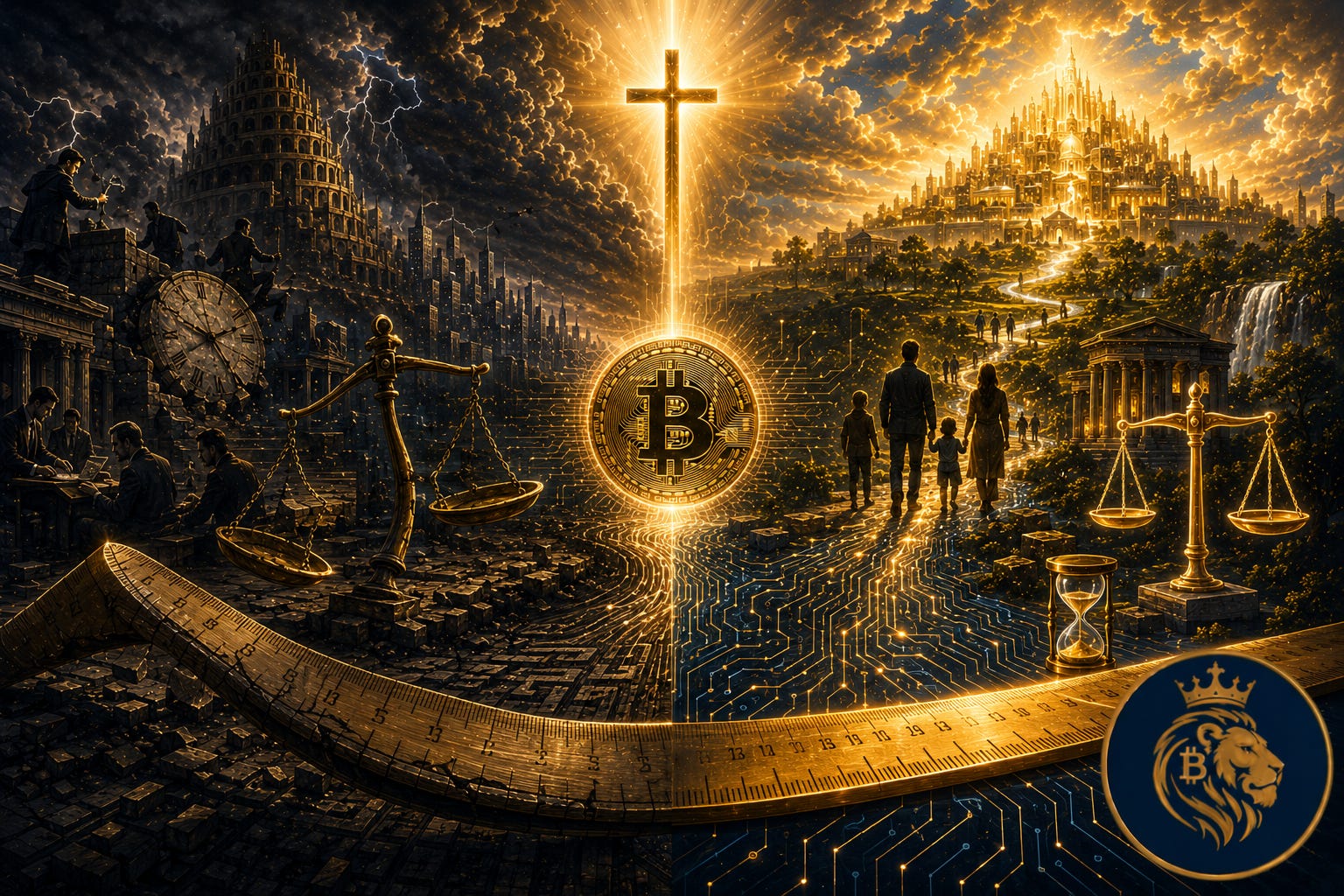
We rarely say it out loud. But we think it. The danger is not merely disappointment. The danger is that we begin using a bent ruler.
One of the most profound moments in all of Scripture occurs when Moses stands before the burning bush and asks God His name. Moses is carrying forty years of disappointment. He once believed he would deliver Israel. Instead, he finds himself tending sheep in the wilderness. His dreams appear buried beneath decades of obscurity. If anyone understood delay, it was Moses.
Yet God’s response is compelling.
The Lord does not begin by explaining the timeline. He does not provide a strategic roadmap. He does not reveal every detail of what lies ahead. Instead, He reveals Himself.
“I AM WHO I AM.”
These words from Exodus 3:14 may be among the most important ever spoken. Notice what God does not say.
He does not identify Himself as the God who was. He does not identify Himself as the God who will be. He declares Himself as the great I AM.
God exists outside of time because He created time. Before there was a sunrise, there was God. Before there was a calendar, there was God. Before there was a clock ticking away seconds, there was God. Time is not something that governs Him. Time is something He governs.
That truth may sound theological, but it has enormous practical implications.
If God established time, then time cannot be the ultimate measure of His faithfulness.
Think about how often we allow time to become the judge of God’s promises. We assume that a long delay weakens a promise. We imagine that years of waiting somehow diminish God’s commitment. Yet from God’s perspective, His promise has not changed at all. The passing of time may affect our emotions, but it does not affect His covenant.
This is why Scripture repeatedly presents stories that seem almost unreasonable from a human perspective.
Abraham waits decades for Isaac. Joseph spends years in prison before entering the palace. David is anointed king long before he sits on the throne. Moses spends forty years in Midian before confronting Pharaoh. The Apostle Paul disappears into seasons of preparation before launching into the ministry that would transform the ancient world.
The pattern is impossible to miss. God is never in a hurry, yet He is never late. Human beings measure by calendars. God measures by covenant. That distinction changes everything.
When we measure by calendars, our questions become predictable. How long? Why not yet? When will this happen? What is taking so much time? These questions are natural, but they can easily become dangerous. Left unchecked, they convince us that time itself is the final authority.
God asks different questions. Has My promise changed? Has My character changed? Has My covenant changed? Has My nature changed? If the answer is no, then the promise remains exactly as true as the day it was spoken.
The writer of Hebrews understood this reality when he declared, “Let us hold unswervingly to the hope we profess, for He who promised is faithful.” Notice the emphasis. Scripture does not say He who promised is fast. It says He who promised is faithful.
Our culture worships speed. God values faithfulness. Those are not the same thing.
The modern world has conditioned us to expect immediate results. We can order groceries, stream movies, transfer money, and communicate globally within seconds. Speed has become synonymous with effectiveness. We assume that if something is valuable, it should happen quickly.
God rarely works that way.
The Kingdom often grows like a seed. Quietly. Gradually. Almost imperceptibly. The roots form long before the fruit appears. Heaven is often accomplishing its greatest work beneath the surface before anything becomes visible above it.
This is why impatience can become a spiritual form of distorted measurement.
Just as inflation corrupts economic measurement, impatience corrupts spiritual measurement. We begin drawing conclusions that are not true.
Delay becomes denial. Silence becomes absence. Waiting becomes failure. Yet Scripture repeatedly dismantles each of those assumptions.
Abraham eventually held Isaac in his arms. Joseph eventually stood before Pharaoh. David eventually sat on the throne. Moses eventually led Israel out of Egypt. The promise did not fail. The measurement did.
Perhaps that is why I find bitcoin so remarkable. At its core, bitcoin functions like a clock. Roughly every ten minutes, another block arrives. No politician can speed it up. No central banker can alter the schedule. No committee can vote to change reality. The system simply continues operating according to the truth embedded within its design.
Bitcoin reminds us of something humanity desperately needs to remember. Reality exists independent of our preferences. The same principle applies to God.
Truth is not democratic. Reality is not determined by majority vote. Neither God’s character nor His covenant bends to public opinion. He remains who He is whether we acknowledge it or not.
The great challenge facing many believers today is not that God has forgotten His promises. The challenge is that we have allowed the calendar to become our ruler. We have measured God’s faithfulness through the lens of timing rather than covenant.
Abraham’s story invites us into a different way of seeing. The passing of years did not weaken God’s promise. They merely revealed whether Abraham would trust the character of the One who made it.
The same question confronts us. Will we measure God by the calendar, or will we measure Him by His covenant?
One ruler leads to discouragement. The other leads to faith.
Yet this raises an even deeper question. If God’s promises remain covenant realities regardless of time, why do some seem to arrive immediately while others require years of perseverance? Why do some prayers appear to be answered overnight while others unfold across decades?
To answer that question, we must examine another instrument humanity has been bending since the Garden of Eden.
The scale itself.
Kingdom Principles
God measures by covenant while humanity measures by calendars.
Delay does not diminish a promise.
Faithfulness is not proven by speed.
The character of God is a more reliable measurement than present circumstances.
A bent calendar can distort spiritual reality just as a bent ruler distorts physical reality.
Trust grows when we anchor ourselves in the nature of the great I AM rather than the passage of time.
Prayer 🙏
Father, forgive us for the times we have measured Your faithfulness by our clocks instead of Your covenant.
Teach us to trust Your character when circumstances seem contradictory and to remember that Your promises do not weaken with time. Strengthen our faith in seasons of waiting and help us see that You are never late, never absent, and never unfaithful. May we become men and women who measure reality by Your Word rather than our fears. Through Jesus, the Alpha and the Omega, the One who stands outside of time and yet walks faithfully with us within it.
In Jesus’ name, Amen. ✝️ 👑 🕊️ ⏳ ₿