

We have never had more ways to see.
Satellites circle the earth. Cameras sit in our pockets. Financial markets move across glowing screens in real time. Social media allows us to witness events unfolding thousands of miles away within seconds. Humanity has developed an extraordinary ability to observe almost everything.
Yet for all our technological progress, we remain remarkably skilled at overlooking the things that matter most.
The lonely. The hurting. The overlooked. The lost. Perhaps that is why the story of Zacchaeus feels so relevant today.
Luke tells us that Zacchaeus was a chief tax collector and a wealthy man. To modern readers, those words may not carry much emotional weight. In first-century Israel, they carried enormous weight. Tax collectors were among the most despised people in society. They worked on behalf of Rome, often enriching themselves through extortion and corruption. They represented everything people hated about power, money, and injustice.
If someone were creating a list of people least likely to become the hero of a biblical story, Zacchaeus would have ranked near the top. Yet something was happening inside him. Luke says he wanted to see Jesus. Not debate or criticize Him. Simply see Him.
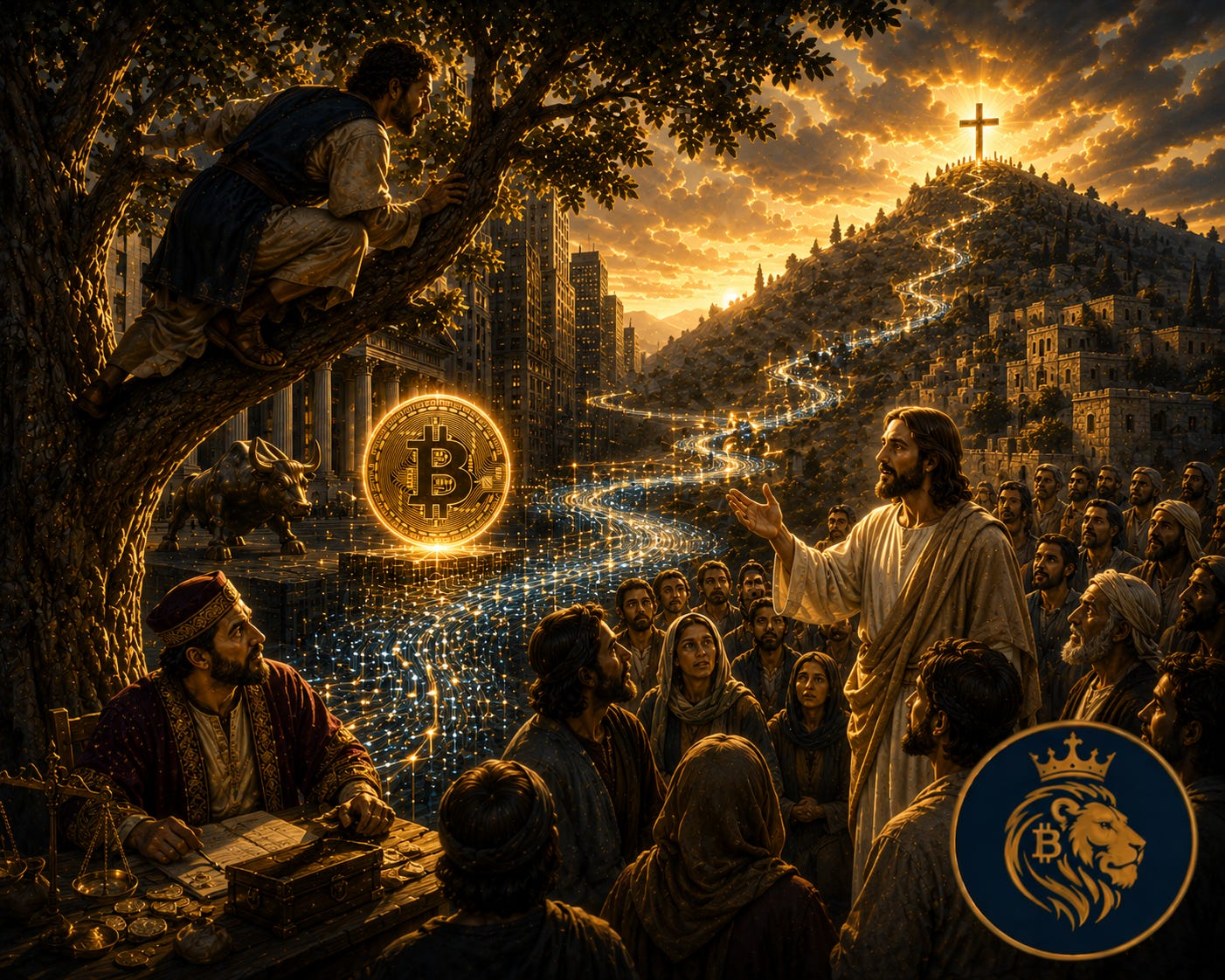
So this wealthy man climbed a tree.
The older I get, the more I appreciate how remarkable that detail actually is. Wealth often protects dignity. Status encourages image management. Successful people spend tremendous energy ensuring they appear successful. Yet Zacchaeus abandoned all concern for appearances because something inside him had become more important than preserving his reputation.
The story reminds me of David dancing before the Lord in 2 Samuel 6. When criticized for appearing undignified, David responded that he would gladly become even more undignified before God if necessary.
Pride protects appearances. Humility pursues truth. Zacchaeus stopped worrying about how he looked and became consumed with seeing Jesus. Then something extraordinary happened. Jesus stopped.
Out of all the crowds pressing around Him, all the demands competing for His attention, and all the people seeking something from Him, Jesus stopped beneath a sycamore tree and looked up.
The miracle is not that Zacchaeus climbed. The miracle is that Jesus stopped.
“Zacchaeus, hurry and come down. I must stay at your house today.”
Must. That word carries enormous significance. Jesus did not say He might stop by. He did not say He would try to fit Zacchaeus into His schedule. He said He must.
The God who created the universe stopped for a man everyone else had written off. The crowd saw a sinner. Jesus saw a son. The crowd saw a tax collector. Jesus saw redemption. The crowd saw a problem. Jesus saw a future. That revelation should change the way we view both people and ourselves.
One of the most fascinating parts of the story happens after Jesus enters Zacchaeus’s house. Zacchaeus immediately begins talking about money. Not because Jesus demanded it. Not because salvation could be purchased. But because repentance had already begun transforming his heart.
“Half of my possessions I give to the poor. If I have cheated anybody, I will repay four times the amount.”
Notice what changed. His stewardship. The crowd wanted behavioral modification. Jesus produced heart transformation. Transformed hearts inevitably transform stewardship. What once seemed radical suddenly became reasonable.
This is one reason I often tell people that bitcoin is not a rebellion. It is a repentance. Not repentance from sin. Only Jesus can transform the human heart and reconcile humanity to God. Rather, repentance from distorted incentives.
Repentance from endless consumption. Repentance from believing stewardship can be outsourced indefinitely to governments, institutions, central banks, or financial systems.
Bitcoin quietly invites people to ask questions modern culture often avoids. What do I actually own? What am I building? What am I leaving behind? How should I steward what has been entrusted to me?
Those are ultimately spiritual questions long before they become financial ones.
The Founding Fathers understood something similar. America’s constitutional system was built on the belief that freedom and responsibility must travel together. Liberty without virtue eventually collapses. Rights require stewardship. Self-government requires self-discipline.
Bitcoin reflects many of those same instincts economically. It rewards patience over impulse, responsibility over dependency, and long-term thinking over short-term consumption. It forces people to confront stewardship again.
Yet bitcoin ultimately points toward something even deeper. Bitcoin can reveal truth. Jesus restores people. Bitcoin can expose incentives. Jesus transforms hearts. Bitcoin can encourage stewardship. Jesus redeems stewards.
That distinction matters as the deepest lesson in Luke 19 is not about Zacchaeus. It is about Jesus.
The story concludes with one of Christ’s most important declarations: “The Son of Man came to seek and save the lost.” That is what stopped Him beneath the tree. Not wealth, influence, status. it was lostness which remains one of the most comforting truths in all of Scripture.
The God who sees everything still stops for individuals. For Zacchaeus. For you. For me. That may be the most remarkable revelation of all.
Kingdom Principles 👑
God sees what others overlook and values what others dismiss
Humility often precedes breakthrough and transformation
Repentance changes stewardship because it changes the heart
Bitcoin is not a rebellion; it is a repentance from distorted incentives and poor stewardship
Freedom and responsibility must travel together
Jesus seeks the lost before He transforms their lives
Technology may reveal truth, but only Christ can redeem hearts
True wealth begins with faithful stewardship under God
Prayer 🙏✝️🔥
Lord,
Thank You for being the God who sees.
When we feel overlooked, forgotten, broken, or unseen, remind us that Your eyes never leave us. Thank You for pursuing us long before we ever thought to pursue You.
Give us the humility of Zacchaeus to seek You without concern for appearances and the courage to respond when You call our name. Transform our hearts so completely that our stewardship, priorities, and relationships reflect Your Kingdom.
Help us repent of anything that has distorted our understanding of ownership, responsibility, generosity, or purpose. Teach us to steward faithfully what You have entrusted to us and to build lives rooted in truth rather than appearances.
Holy Spirit, make us sensitive to those around us who feel invisible. May we become people who stop, notice, serve, and love just as Jesus did.
And may we never forget that the greatest miracle in the story was not a man climbing a tree.
It was a Savior who stopped. In Jesus’ name, Amen. ⚔️🕊️✝️🔥🌳