

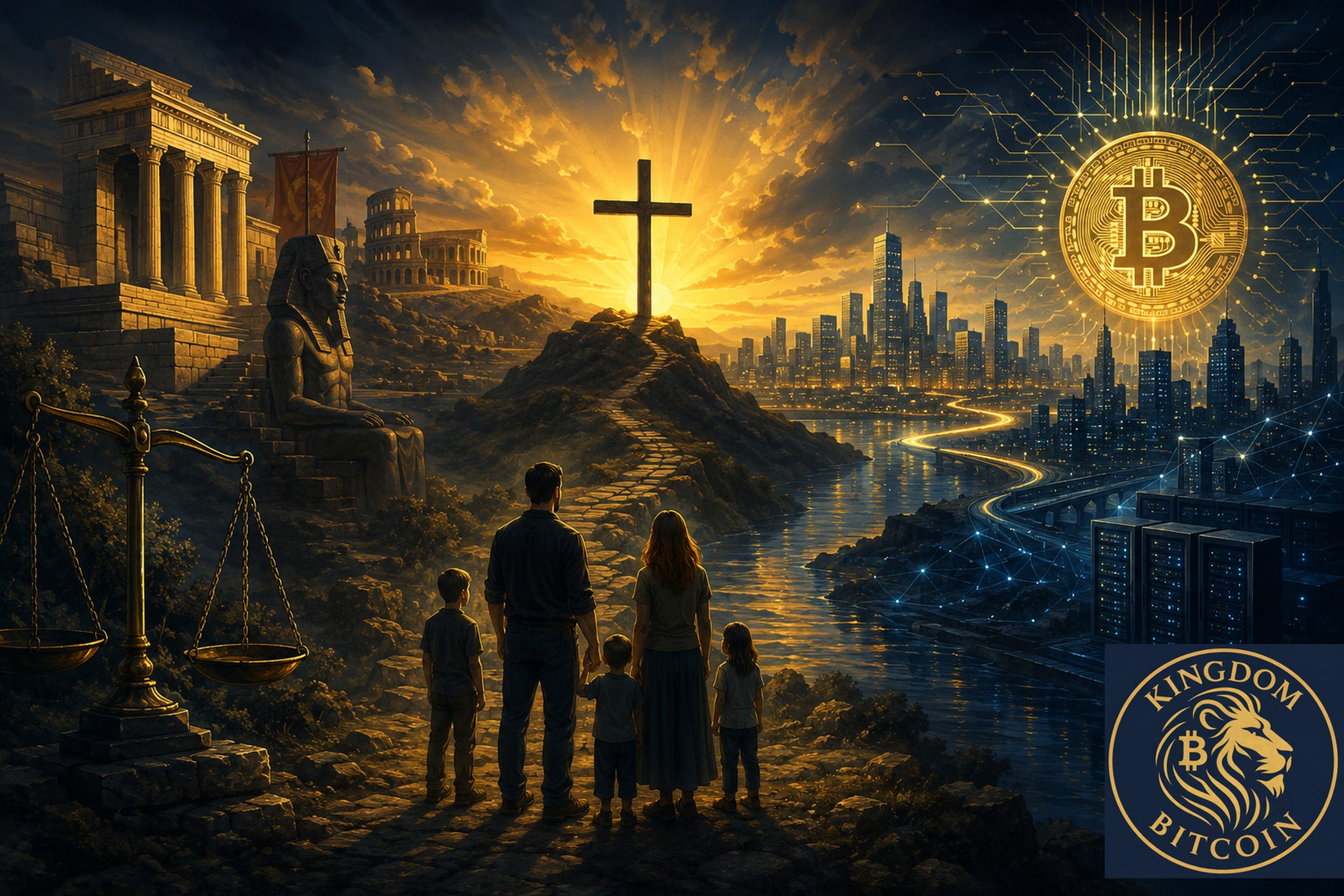
When Hard Work Buys Less and the Future Moves Farther Away
Money is not merely something we spend. It measures labor, stores time, shapes behavior, distributes power, and influences how far into the future we are willing to love. When the measure bends, households and civilizations eventually bend with it.
A husband and wife stand in a grocery aisle comparing two carts.
Not two families. Their own cart from last year and the one in front of them now. The blueberries go back on the shelf. The beef is replaced with something cheaper. A cereal that once felt ordinary suddenly becomes a small negotiation. Nothing about the family has changed. They still work the same jobs, love the same children, and make the same effort to be responsible.
Yet the bill is heavier while the cart is lighter.
That is how inflation enters a household.
It does not arrive as a chart from an economist or a press conference from a central bank. It arrives quietly, through substitutions. It appears in the decision to delay a home purchase, in the rising cost of childcare, in the vacation postponed again, and in the savings account that still contains dollars but somehow feels weaker than it did before.
The dollars have not disappeared.
They have lost muscle.
Inflation is often explained simply as rising prices, but that is incomplete. Prices can rise for many reasons, including shortages, weather, taxes, supply disruptions, changing demand, and higher production costs. The deeper monetary issue is what happens when the amount of money circulating through an economy expands over time while the quantity of goods and services does not expand at the same pace.
Each unit can command less.
For the household, that distinction becomes painfully practical. A person may save faithfully for ten years and discover that the target has been moving the entire time. The down payment becomes larger. Tuition increases. Insurance costs more. Retirement requires a number that seems to rise almost as quickly as the saver can approach it.
That changes behavior.
When simple saving feels insufficient, people are pushed toward investments they may not understand simply to avoid falling behind. They take more risk because standing still feels like moving backward. The stock market stops looking like one tool among many and starts feeling like a compulsory escalator.
That is where the problem becomes moral as well as economic.
A system that teaches patience is for fools is pedagogically corrupt.
It teaches households that discipline alone will not be enough. It rewards those with access to appreciating assets while punishing those whose wealth remains primarily in wages and cash. It can train an entire generation to believe that speculation is maturity and patience is naivety.
Scripture presents another vision.
In Genesis 41, Joseph stands before Pharaoh and interprets a dream that reveals seven years of abundance followed by seven years of devastating famine. His response is not panic. He does not tell Egypt to consume everything today because tomorrow belongs to God.
He tells them to prepare.
“Let Pharaoh appoint commissioners over the land to take a fifth of the harvest of Egypt during the seven years of abundance.”
Joseph understood that preserving today’s abundance for tomorrow was not fear.
It was obedience to reality.
That distinction matters for Christians because we sometimes confuse faith with passivity. We know greed is dangerous, so we become suspicious of saving. We know God provides, so planning can begin to feel almost unspiritual. Yet Proverbs points to the ant storing in summer. Scripture praises the wise household that possesses reserves. Joseph’s storehouses eventually become instruments of mercy.
Preparation governed by fear can become an idol.
Preparation governed by wisdom becomes stewardship.
Bitcoin enters this conversation because it asks a provocative question about the monetary unit itself. Its supply does not expand because an institution believes the moment requires additional issuance. Its ultimate limit is fixed, and its issuance schedule is known in advance.
That does not make Bitcoin a guarantee of purchasing power. Its market price can be volatile, and no one should confuse scarcity with certainty.
But the architecture asks something important.
Should preserving the fruit of labor require people to become increasingly sophisticated investors simply to survive time?
Money should help carry work into the future.
When it consistently fails to do that, families adapt in ways that reach far beyond money. They delay homes. They delay children. They reduce generosity. They become more anxious about tomorrow because tomorrow keeps becoming more expensive.
Inflation therefore does more than alter prices.
It alters horizons.
And the question for the Christian is not merely how to beat inflation.
It is whether the systems shaping our households encourage the virtues Scripture teaches us to practice.
But that raises an even deeper question.
Why does Scripture care so much about money in the first place?
Kingdom Principle 👑
Preparing for tomorrow is not fear when preparation is governed by wisdom.
Joseph did not prepare because he distrusted God. He prepared because God revealed reality, and wisdom responded faithfully. Biblical stewardship recognizes that time, scarcity, responsibility, and future obligations are real.
Saving becomes unhealthy when it is driven by panic or worshiped as security. But thoughtful preparation can become an expression of love. Margin allows households to endure, serve, give, and respond when others are in need.
Prayer 🙏
Heavenly Father, teach us to distinguish wisdom from fear and preparation from hoarding. Give us discernment as we save, invest, spend, and plan for the future. Help us recognize the pressures shaping our households without allowing anxiety to rule our hearts.
Give families strength when hard work seems to purchase less and patience when the future appears to move farther away. Teach us to prepare faithfully, give generously, and trust You fully. May every financial decision be governed by wisdom, stewardship, and the peace we find in Jesus Christ.
In Jesus’ name, Amen. 🙏📖🌾🛒🏠₿🕊️👑
Love you son. Dad