

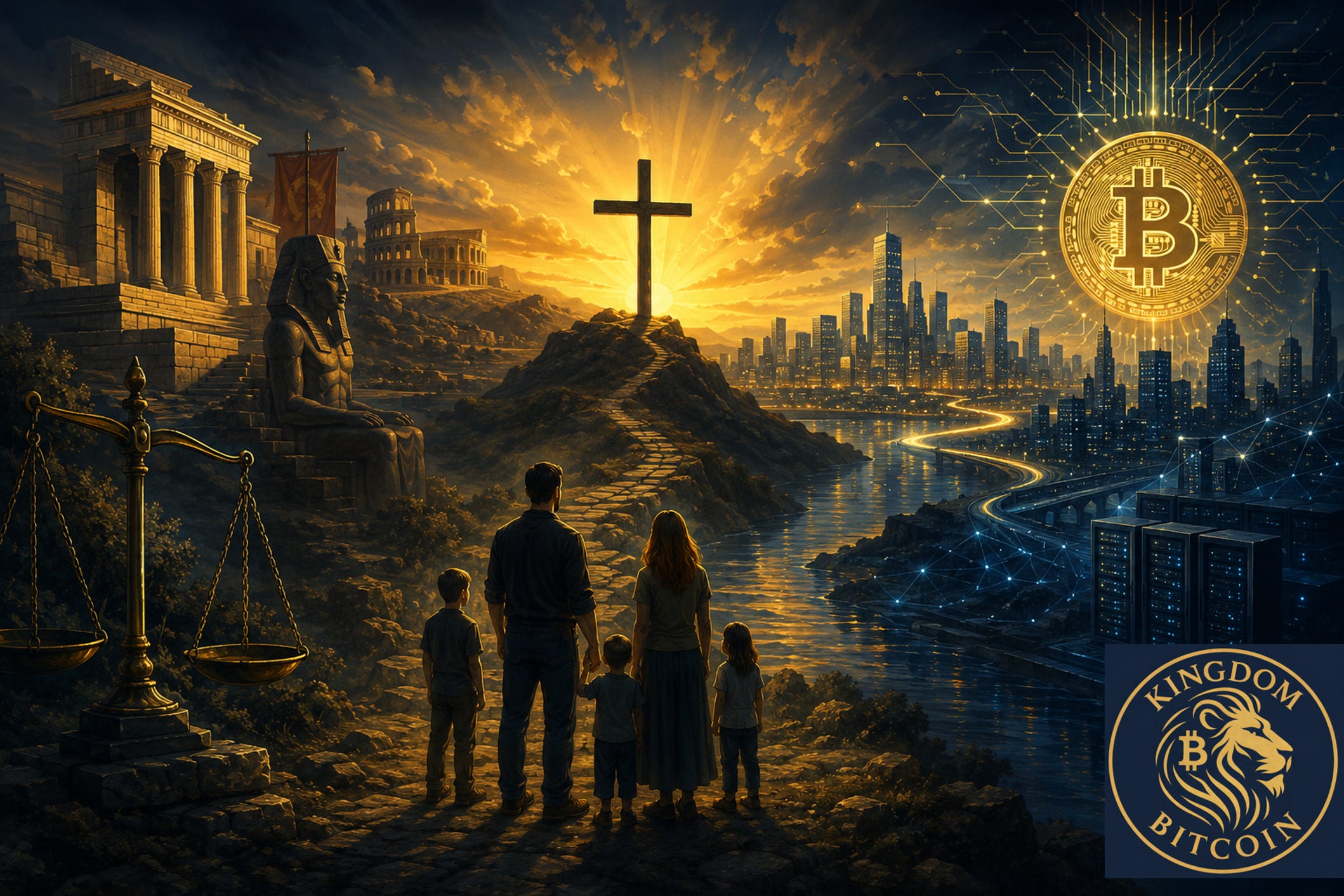
When the Rules Change but the Quota Remains
Money is not merely something we spend. It measures labor, stores time, shapes behavior, distributes power, and influences how far into the future we are willing to love. When the measure bends, households and civilizations eventually bend with it.
Yesterday, the straw was provided. Today, gather your own. Tomorrow, make the same number of bricks.
Nothing changed in the quota. Everything changed in the measure. That is how Pharaoh increased control over Israel, not simply by demanding more labor, but by changing the terms while pretending the obligation remained the same. The people were told to do more with less and then punished when reality refused to cooperate.
Exodus records the order with brutal clarity: “You are no longer to supply the people with straw for making bricks; let them go and gather their own straw. But require them to make the same number of bricks as before.” Pharaoh’s cruelty was obvious, but his deeper weapon was dependency. He controlled the inputs, the expectations, and the consequences. Israel did not merely work for Pharaoh. They lived inside an architecture where Pharaoh could change the rules above them.
That pattern matters because power often becomes most dangerous when the people beneath it cannot meaningfully challenge the terms. A ruler does not need to steal everything in one dramatic act. He can change the measure gradually, shift responsibility downward, and insist that the original promise still stands. Eventually, those living inside the system begin blaming themselves for failing to meet conditions that were altered without their consent.
Debt can operate with a similar tension.
Scripture does not teach that every loan is sinful. Debt can finance a home, build a productive business, bridge an unexpected emergency, or fund something that creates enduring value. But Proverbs offers a description that should never be softened into a motivational slogan: “The borrower is servant to the lender.”
That is descriptive before it is moralistic.
Debt converts part of tomorrow’s labor into a claim made today. The borrower receives something now and promises future work in return. That can be reasonable. It can also become dangerous when the terms change, income weakens, rates rise, or borrowing becomes the permanent bridge between ordinary earnings and ordinary life.
A household with manageable debt may retain significant freedom. A household with no margin can begin living like Israel under the quota. Work harder. Cut more. Delay more. Produce the same bricks.
The problem is not that every lender is Pharaoh or every debt is oppression. That would be intellectually lazy and biblically unserious. The deeper lesson is that dependency always deserves examination because whoever controls the terms possesses influence over the future.
First Samuel makes the same warning from another angle. When Israel asks for a king like the surrounding nations, Samuel describes what kings tend to do. They take sons, daughters, fields, vineyards, grain, and flocks. Scripture does not deny legitimate government. It simply refuses to romanticize concentrated power.
Human beings do not become angels because they receive authority. That is why restraints matter.
The biblical suspicion is not of institutions themselves. Families need institutions. Markets need rules. Nations need government. Civilization depends upon structures of trust.
The concern is unbounded human power. This is where Bitcoin becomes interesting.
Bitcoin was designed so that no single person, company, miner, developer, bank, or government can simply announce a new monetary rule and expect everyone else to obey. Its issuance schedule is embedded in the protocol. Nodes independently verify whether the rules are being followed. Changing something as fundamental as supply would require extraordinary coordination across participants who are free to reject the change.
No Pharaoh can wake up tomorrow and demand fifty bitcoin per block because the palace spent too much this year.
That does not make Bitcoin beyond human influence. Software can change. Participants can coordinate. Markets can become concentrated. Governments can regulate access points. Bitcoin is not magical and should never be described that way.
But its architecture does something unusual. It makes changing the core rules difficult. That difficulty is not an inconvenience. It is part of the design.
Modern systems often celebrate flexibility because flexibility allows leaders to respond quickly to crises. Sometimes that flexibility is useful. But every flexible rule eventually raises the same question: flexible for whom?
The person nearest the lever usually appreciates discretion more than the person whose savings are being measured by it.
Bitcoin introduces a different assumption.
The rules should be difficult to alter precisely because the people subject to them should not have to wonder whether the ruler will be a different length tomorrow.
That is not rebellion against authority. It is a recognition of human nature.
The God of Scripture establishes authority while also placing limits around it. Kings answer to God. Judges are commanded not to show partiality. Merchants must use honest measures. Lenders cannot treat the poor without restraint. Power is legitimate, but it is never ultimate.
Pharaoh’s bricks remind us why.
When one authority controls the terms, the inputs, the quota, and the punishment, the worker eventually becomes less than a steward.
He becomes dependent.
And when dependency becomes normal enough, people can forget that the rules ever could have been different.
Pharaoh controlled production. Caesar would add another layer. He would put his image directly on the money itself.
Kingdom Principle 👑
Authority becomes dangerous when those subject to it cannot trust the measure.
God establishes order, but He never treats earthly power as absolute. Scripture repeatedly warns rulers, judges, merchants, lenders, and leaders that authority must remain bounded by truth and justice. Power becomes corrupting when it can alter the terms for others while exempting itself from accountability.
Faithful stewardship therefore requires discernment about dependency. Debt, institutions, and authority are not inherently evil, but each creates relationships of trust and obligation. Wisdom asks who controls the terms, whether the measure remains honest, and what freedom is being exchanged in return.
Prayer 🙏
Heavenly Father, give us wisdom to recognize the difference between rightful authority and unhealthy dependence. Protect us from both rebellion for rebellion’s sake and passive acceptance of systems that quietly distort truth. Teach us to honor legitimate institutions while remembering that every human authority remains accountable to You.
Give us discipline in debt, courage in stewardship, and discernment when the rules around us begin to change. May we build households with margin, responsibility, and freedom to serve others. Keep every system, ruler, institution, and technology beneath the authority of Jesus Christ, our true King.
In Jesus’ name, Amen. 🙏📖🧱⚖️₿👑🕊️