

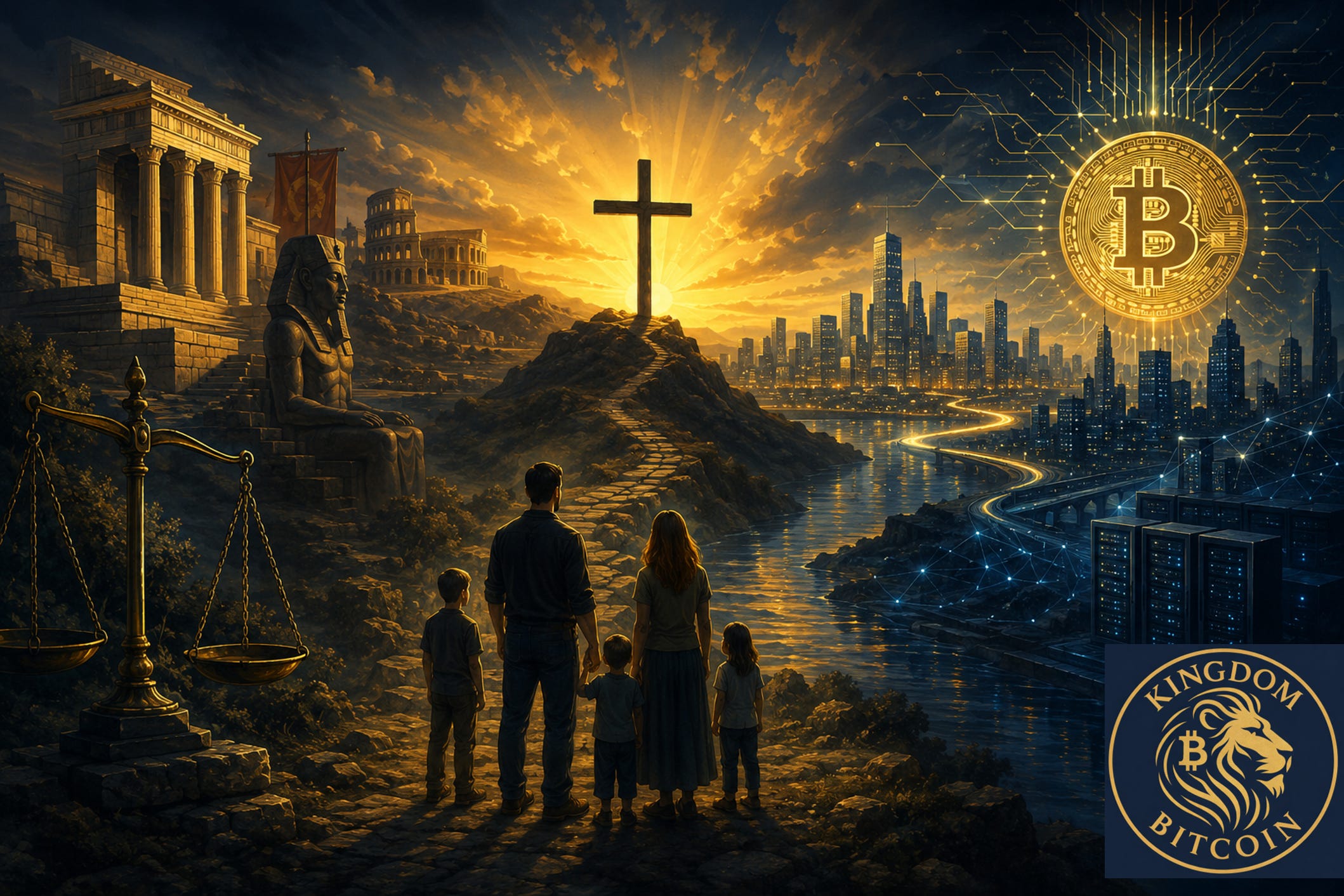
Every Monetary System Is Teaching You Something
Money is not merely something we spend. It measures labor, stores time, shapes behavior, distributes power, and influences how far into the future we are willing to love. When the measure bends, households and civilizations eventually bend with it.
In an ancient marketplace, a merchant lifts a bag of grain onto a scale.
The customer watches the beam settle and assumes the transaction is fair. What he does not see is that the merchant has shaved a little from the measure. Another merchant keeps two sets of weights, one for buying and another for selling. No theft appears dramatic enough to provoke outrage. No armed robbery has taken place.
Yet God sees the scale.
“The Lord detests dishonest scales, but accurate weights find favor with him.”
That verse from Proverbs is easy to read as an ancient warning about cheating customers. It is that. But it is also much more.
God cares about the scale because money touches people.
Scripture speaks repeatedly about wages, debt, inheritance, land, gleaning, treasure, lending, honest weights, unjust gain, and withheld compensation because economic systems are never merely technical. They shape lives. They influence whether a worker is rewarded fairly, whether a family can save, whether a widow can endure, and whether a child receives an inheritance or a burden.
Money is moral technology.
It stores labor. It prices time. It distributes power. It extends trust across distance and years. It rewards certain behaviors while making others more difficult.
That means money is always teaching.
A monetary system that steadily weakens savings teaches people not to remain in cash for long. A debt-heavy system can reward leverage and make patience appear unsophisticated. Rising asset prices can teach households that participation in financial markets is no longer simply an investment choice but a requirement for keeping pace.
The lessons become habits. And eventually the habits begin forming people.
This is why inflation is not merely about purchasing power. When people believe tomorrow will always cost more than today, urgency enters their decision-making. Spend now. Borrow now. Buy the asset before someone else does. Take more risk because patience may leave you poorer.
That changes more than portfolios. It changes imaginations. Jesus understood this with unsettling clarity when He spoke about mammon. “No one can serve two masters,” He said. “You cannot serve both God and money.”
Mammon is not simply cash sitting in a wallet. It is wealth elevated into a rival source of security, identity, control, and hope. It promises to answer questions the human heart was designed to bring before God.
Will I be safe? Will I have enough? Can I control tomorrow? Does what I own prove who I am?
Money becomes spiritually dangerous when it moves from servant to master.
But there is another danger Christians should recognize. We can become so concerned about the love of money that we stop asking whether the monetary systems around us are themselves teaching unhealthy desires.
Scripture does not give us permission to ignore architecture.
Amos condemned merchants who made the measure smaller and the price larger while exploiting the poor. James warned that wages withheld from workers cried out before God. Leviticus places honest measurement inside Israel’s holiness.
God was not interested only in whether individual hearts privately felt generous. He cared how exchange was structured. That should change the way Christians approach Bitcoin.
The first question should never be, “Will bitcoin make me rich?” The better question is, “What behaviors does this monetary architecture reward?”
Bitcoin has a fixed maximum supply. Its issuance schedule is visible in advance. Individuals can hold it directly. Its rules encourage a longer time horizon because new supply cannot simply be expanded whenever additional monetary flexibility becomes convenient.
None of that makes bitcoin righteous.
A person can own bitcoin greedily. Speculate recklessly. Become arrogant about understanding it. Treat scarcity itself as a god.
Technology does not sanctify the user. But architecture still matters.
If one system continually encourages greater leverage, shorter horizons, and dependence upon monetary discretion, while another emphasizes scarcity, direct ownership, verification, and responsibility, Christians should at least be willing to examine the difference.
Not because Bitcoin is the Kingdom. Because systems form habits. And habits eventually form cultures.
Money has been discipling people long before most of us realized we had enrolled in the class.
That is why the question is larger than economics. What kind of person is our money training us to become? Patient or hurried? Responsible or dependent? Generous or fearful? Long-term or reactive? Steward or consumer?
Every monetary system eventually answers those questions through the behavior it rewards.
And if money is not neutral, then the next question becomes unavoidable.
Who holds the power to shape the measure?
Kingdom Principle 👑
Every monetary system forms habits long before we recognize the teacher.
God cares about money because God cares about people. The systems through which we earn, save, borrow, give, and inherit do more than move value. They quietly train our appetites, fears, expectations, and time horizons.
Faithful stewardship therefore requires more than managing money responsibly. It requires discernment about what our money is teaching us to love. Any monetary system must remain beneath the authority of God, and any wealth we hold must remain a servant rather than become a master.
Prayer 🙏
Heavenly Father, reveal the ways money has been shaping our hearts without our noticing. Show us where fear, urgency, greed, debt, or the desire for control have become teachers stronger than Your Word. Give us wisdom to recognize both honest and dishonest measures and courage to resist systems that quietly train us away from faithful stewardship.
Teach us to hold money without serving it, to save without worshiping security, to invest without making wealth our identity, and to give with joy. May every resource entrusted to us remain beneath the lordship of Jesus Christ and become an instrument of truth, generosity, responsibility, and love.
In Jesus’ name, Amen. 🙏📖⚖️💰₿🕊️👑