

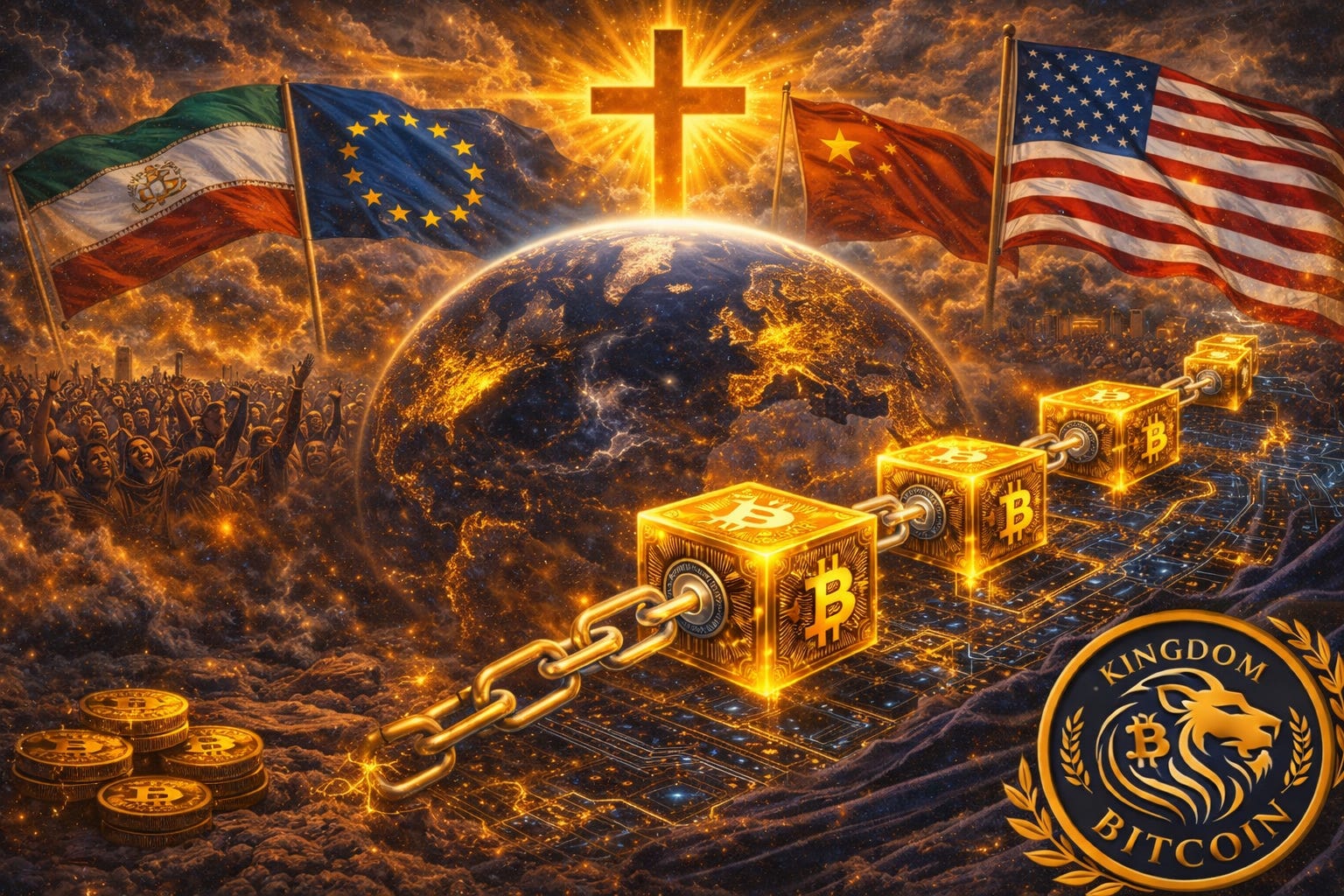
Foreign policy is money wearing a suit.
Yesterday we examined how monetary disorder precedes geopolitical disorder. Today we examine the architecture that makes that disorder possible.
Modern foreign policy is not only diplomacy and defense. It is the ability to settle. To move value across borders. To clear trades. To insure cargo. To borrow at scale. Power now flows through financial plumbing before it flows through military force.
The United States sits at the center of that system. Dollar liabilities, dollar-clearing channels, and dollar-denominated safe assets remain foundational to global trade. Even as the dollar’s share of reserves has gradually declined, it remains dominant enough that decisions in Washington and at the Federal Reserve transmit globally.
This is leverage.
Sanctions are foreign policy executed through routing restrictions. Through the Office of Foreign Assets Control, access to the financial system can be narrowed or removed. Accounts freeze. Correspondent access closes. Entire institutions become untouchable to regulated intermediaries.
No missile launched.
Yet oxygen reduced.
After Russia’s invasion of Ukraine, Western commitments rose into the hundreds of billions across military, humanitarian, and budget categories. Simultaneously, sanctions intensified. Portions of Russian banking were severed from SWIFT messaging. Assets immobilized. Settlement pathways constricted.
This is financial statecraft. It is also moral tension.
Sanctions exist to restrain aggression and protect civilians. Yet when settlement becomes discretionary, citizens become conditional. When rulers can decide who may transact, they eventually influence who may participate. History teaches this lesson repeatedly.
The American experiment was built on suspicion of concentrated authority. The Founders debated central banking because they understood that control of issuance eventually becomes control of liberty. Monetary power is political power in disguise.
Scripture speaks with similar clarity. “A false balance is an abomination to the Lord, but a just weight is his delight” - Proverbs 11:1
Honest weights are not poetic language. They are civilizational safeguards.
When crypto emerged as a meaningful rail, sanctions practice expanded to include blockchain addresses and infrastructure tied to illicit finance. Governments responded because neutral rails can be exploited. That response is lawful. It is understandable. It is part of Romans 13 responsibility.
At the same time, crypto revealed something profound.
Early in the Ukraine conflict, digital asset donations flowed rapidly to civilian and government addresses. Blockchain analytics firms reported hundreds of millions routed in short order. Compared to sovereign aid, the sums were smaller. But speed matters when survival is immediate.
Permissionless rails move at internet velocity. This is the double-use tension.
Bitcoin can preserve dignity when institutions fail. It can also be used by actors attempting to route around enforcement. Serious adults hold both truths.
Here is the counterweight.
Bitcoin’s ledger is public. Transactions are recorded transparently. Over time, enforcement agencies and analytics firms have demonstrated that illicit flows are traceable in ways that offshore banking corridors often are not. It is not invisible money. It is auditable money.
Neutral settlement is not moral endorsement. It is structural restraint in a discretionary age. Bitcoin does not ask who you are. It enforces what the rules are. That is not a defense of wrongdoing. It is a limitation on privilege.
Governments will continue to sanction bad actors. Exchanges will comply with law. Criminal misuse will be pursued. That is proper. A society without law collapses into chaos.
But here is the deeper issue.
When access to settlement is entirely dependent on centralized discretion, leverage scales faster than accountability. Power without embedded restraint eventually erodes the very legitimacy it seeks to defend.
China, Russia, and emerging markets observes this. If dollar rails can be narrowed at scale, alternative rails will be explored. Not necessarily because they reject order, but because sovereignty seeks insulation.
Bitcoin enters this landscape neither as rebellion nor as utopia. It is not issued by a nation. It is not controlled by a central bank. Its supply schedule is fixed. Its validation is distributed. Its issuance cannot be quietly expanded to solve political impatience.
Concentrated power tempts. Discretion expands. Guardrails protect.
Wars are funded through taxes, debt, or inflation. Sanctions influence which lever becomes dominant. Energy contracts, trade invoicing, sovereign debt issuance, and aid disbursements all route through financial plumbing.
Again, foreign policy is money wearing a suit.
The Kingdom question is not whether power exists. It always has. The Kingdom question is whether power is restrained before crisis forces restraint.
Bitcoin does not redeem human nature. Christ does. Systems can either amplify temptation or limit its scale.
In a fallen world, restraint is mercy.
And systems that embed restraint endure longer than systems built on impulse.
Measured. Convicted. Anchored.
Prayer 🙏
Dear Father,
You see the hearts of rulers and the hidden levers of nations. Guard those who steward financial authority from pride and overreach. Protect civilians when systems tighten. Teach leaders restraint before crisis demands it.
May we value honest weights, lawful order, and disciplined power. Anchor our trust not in leverage or liquidity, but in Christ alone.
In Jesus’ name, Amen.