

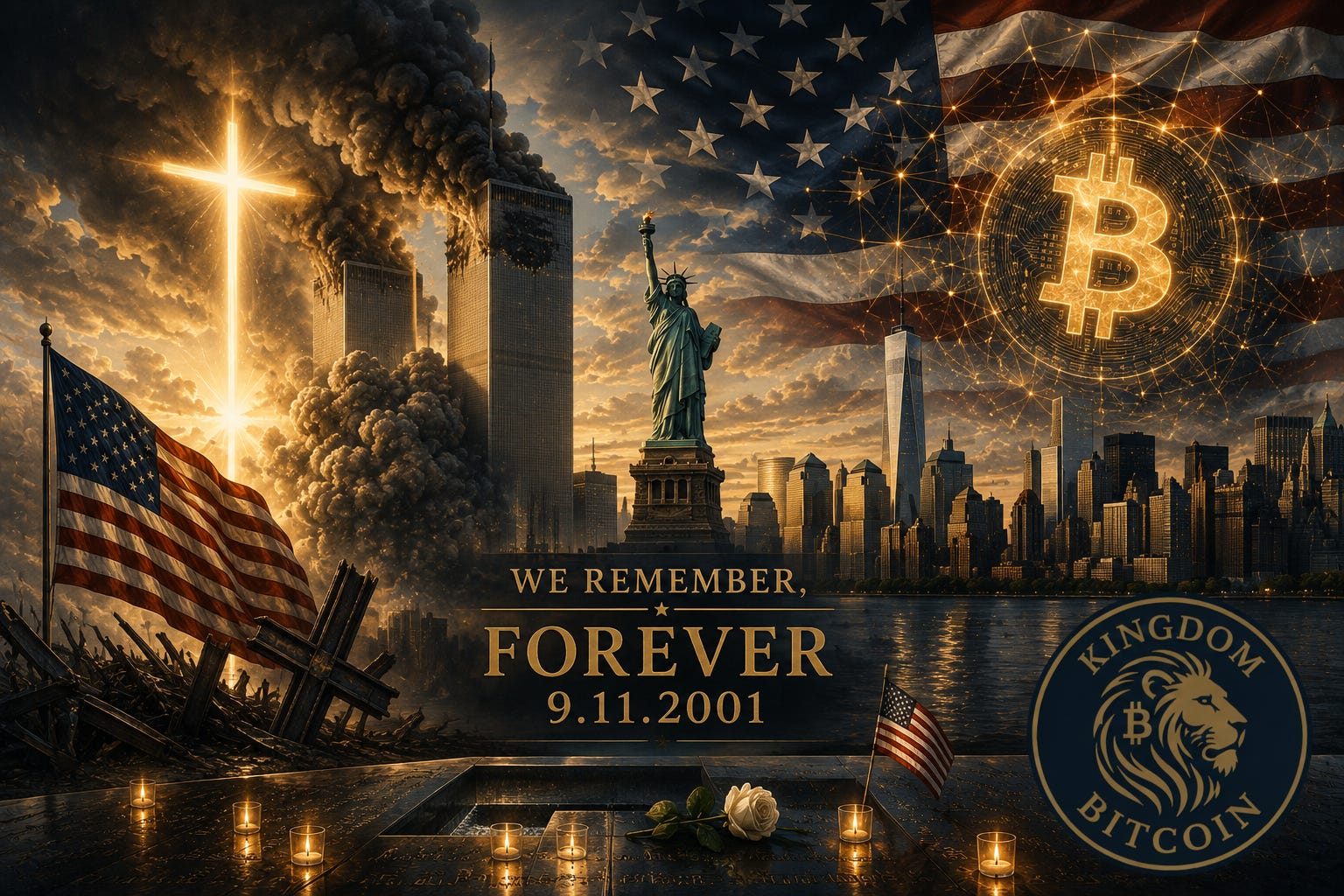
Monday, September 10, 2001 ended like thousands of American days before it. Families finished dinner, children prepared for school, business travelers packed for early flights, firefighters went home expecting another ordinary shift, and workers in lower Manhattan looked toward the Twin Towers as permanent features of the skyline. At the Pentagon, meetings were scheduled for Tuesday. Across the country, Americans made plans for tomorrow with the confidence that tomorrow would arrive largely as expected. No one knew that within hours, the ordinary would become sacred.
That is what September 10 teaches us twenty-five years later. We often recognize the value of peace only after it has been violated. We recognize the gift of routine only after routine disappears. We recognize the strength of systems only when someone attacks the assumptions beneath them. Scripture says in James, “You do not even know what will happen tomorrow.” That is not a call to live anxiously. It is a call to live gratefully.
America on September 10 was not without problems. The dot-com bubble had burst, markets had weakened, the economy was slowing, and the Federal Reserve had already begun cutting interest rates. Airlines were under financial pressure before terrorism transformed their industry overnight. Yet the larger architecture of American life still felt secure. Air travel, financial markets, office towers, communications networks, public institutions, and national borders functioned largely as invisible infrastructure because most people assumed they would continue functioning tomorrow.
That assumption is worth examining.
Every civilization rests upon layers of trust that ordinary people rarely see. We trust that airplanes will land safely, that financial markets will open, that power will remain on, that banks will honor balances, that police and firefighters will answer when called, and that government will defend the nation from those who wish to destroy it. None of those things happen automatically. They exist because people build, maintain, defend, and sacrifice for systems whose importance becomes obvious only when they fail.
Jesus repeatedly taught His disciples to remain watchful. In Luke 12, servants are instructed to remain ready even though they do not know precisely when the master will return. The lesson is not paranoia. It is preparedness. There is a profound difference between living in fear and understanding that peace requires stewardship.
The Founders understood this tension deeply. George Washington warned Americans that national unity was one of the great pillars of independence and security. He knew the republic would face external enemies, internal divisions, and seasons when Americans would have to remember that the name “American” carried obligations beyond private interest. Freedom was precious precisely because it was never self-sustaining.
That principle matters on September 10.
Strong nations do not prepare because they hope for war. They prepare because weakness invites consequences. Secure borders, capable intelligence, strong defense, resilient infrastructure, competent emergency services, and leaders able to act decisively are not enemies of liberty. Properly ordered, they help preserve the conditions in which liberty can flourish.
Free people must hold another truth alongside that one. Preparedness should never become fear. Power should never become unlimited merely because danger exists.
The same Founding generation that believed in national defense also divided governmental power because human beings remain human even in moments of crisis. The American challenge has always been to remain strong enough to defend freedom without surrendering the freedom being defended.
There is a Bitcoin principle here, but it should remain in its proper place.
Bitcoin would not have prevented September 11. It would not have stopped airplanes, rescued people from burning buildings, or replaced the courage required in the hours that followed. But its architecture later embodied a principle every technologist eventually learns: resilient systems should not depend upon perfect conditions or a single point of failure.
Bitcoin distributes its ledger across many independent participants. The record does not exist in one office that can be destroyed, one server that can disappear, or one institution that must remain operational for the network to retain its history. That does not make Bitcoin invulnerable. It demonstrates a principle.
Resilience is built before the crisis.
You do not install redundancy after the system has already disappeared. You do not begin teaching preparedness when the emergency is underway. You do not build trust in the moment when trust is most desperately needed.
That principle reaches far beyond technology.
Families should know their financial affairs before crisis arrives. Communities should know their neighbors before disaster strikes. Churches should build relationships before people need help. Nations should protect critical infrastructure before enemies test it.
And husbands, wives, parents, children, and friends should say what matters while there is still time to say it.
Psalm 90 asks God to “teach us to number our days, that we may gain a heart of wisdom.” September 10, 2001 is one of the clearest reminders in American history that numbering our days is not morbid. It is clarifying.
Ordinary days are not ordinary at all. They are gifts. The drive to work. The phone call from a parent. The dinner with children. The kiss goodbye before a flight. The firefighter returning home after a quiet shift. The skyline we assume will still be there tomorrow. September 10 ended peacefully.
September 11 would reveal how fragile peace can be, how real evil remains, and how extraordinary ordinary Americans can become when history suddenly demands courage.
Tonight, twenty-five years later, we remember the last ordinary day. Tomorrow, we remember those whose next day never ended the way they expected.
Kingdom Principle 👑
Preparedness is not fear, and ordinary peace should never be mistaken for guaranteed peace.
God calls His people to gratitude, vigilance, wisdom, and courage. We honor peaceful seasons not by assuming they will last forever, but by stewarding them well, strengthening what should be strengthened, loving the people entrusted to us, and remaining ready to serve when circumstances change.
Prayer 🙏
Heavenly Father, thank You for every ordinary day we are tempted to overlook. Teach us to number our days with wisdom, to treasure our families, honor those who protect us, and remain grateful for the freedom and peace we have been given. Give our leaders courage and discernment to defend this nation without losing the principles that make it worth defending.
Prepare our hearts for remembrance tomorrow. Help us honor the lives lost, the families forever changed, and the heroes who stepped forward when evil attacked our country. May America remain strong, united, vigilant, and humble under You.
In Jesus’ name, Amen. 🙏🇺🇸📖🕊️🏛️⚖️₿👑