

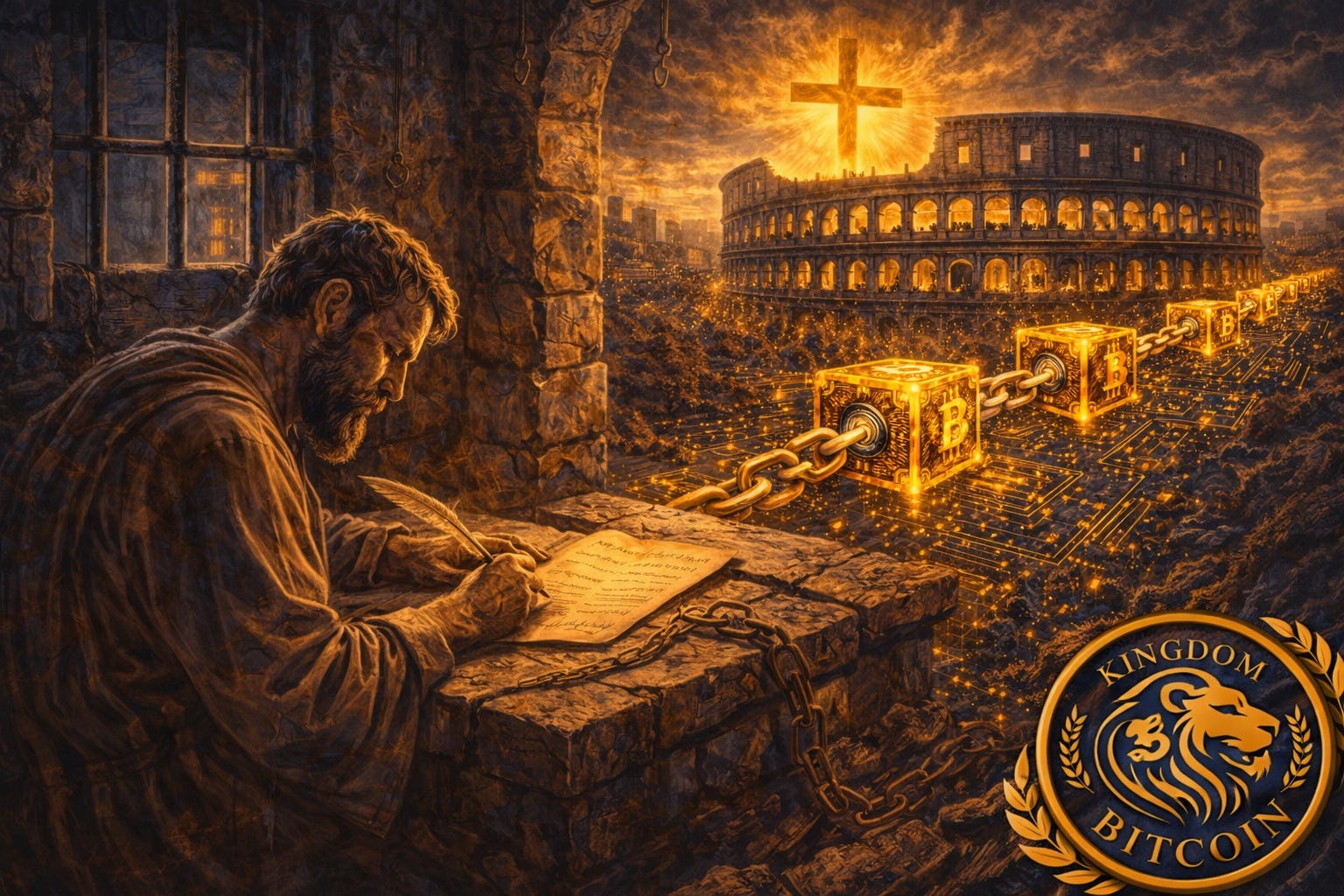
Paul does not leave the athlete in abstraction. He tightens the lens and brings the image into contact with reality. “I do not run aimlessly,” he writes. “I do not box as one beating the air. But I discipline my body and keep it under control, lest after preaching to others I myself should be disqualified.” There is nothing casual in that language. The runner becomes a fighter. The metaphor shifts from motion to impact. A boxer can move beautifully, fast hands, clean footwork, impressive rhythm, but if he never lands a punch, the fight is a performance, not a contest. Motion without contact is illusion. Effort without discipline is waste.
Every athlete knows this distinction. There are those who train, and there are those who pretend. There are those who enter the arena to win, and those who simply want to be seen. Paul is making a declaration about how he lives. He refuses to spend his life shadowboxing. He aligns his actions with his calling, disciplines his body, sharpens his focus, and accepts the cost that comes with real pursuit. Because the stakes are real. The race has an outcome. The fight has a result. And even the one who teaches, even the one who leads, is not exempt from failure. “Lest I myself should be disqualified.” That is not theoretical language. That is a warning. It is the acknowledgment that starting well is not the same as finishing well.
History affirms that truth, not just in people, but in systems. The history of money is a long race filled with strong starters that never reached the finish. The Roman denarius began as a reliable store of value, silver-backed, trusted across an empire. Over time, pressure mounted. Wars expanded. Spending increased. The silver content was quietly reduced. The coin remained, but its integrity did not. The British pound carried similar strength through its rise, anchored in discipline and credibility, until the demands of war and debt eroded the standard. The United States dollar operated under the constraint of gold for much of its history, a system that forced discipline by design. In 1971, that constraint was removed. The system did not collapse overnight. It rarely does. Instead, it changed slowly, then steadily, then permanently.
Each of these systems ran with strength. None of them finished with it. Not because they lacked intelligence, scale, or adoption, but because they lacked the ability to endure pressure without compromise. They began with rules, and under strain, they rewrote them. They looked active. They looked powerful. But in the end, they were beating the air.
This is where Bitcoin introduces something the world has never seen. Bitcoin does not ask for trust. It demands verification. Proof of Work is not a feature to be admired from a distance. It is discipline embedded into the foundation of the system. Every block requires energy. Every transaction is secured through cost. There is no authority that can override the requirement. There is no executive decision that can bypass the process. The work must be done. And if it is not done, the network does not negotiate. It rejects. Completely. Quietly. Absolutely.
This is what it means to land a punch.
Paul’s words carry new weight in that light. “I do not box as one beating the air.” Bitcoin does not simulate effort. It enforces it. It does not pretend to have discipline. It requires it. In a world where systems are often designed with flexibility that becomes fragility, Bitcoin is designed with constraint that becomes strength. It removes discretion. It removes the human tendency to adjust rules in moments of pressure. It replaces trust with proof, promises with process, and governance with adherence.
Paul’s warning about disqualification reaches even deeper. “Lest after preaching to others I myself should be disqualified.” Every failed monetary system followed that exact path. It spoke stability. It promised discipline. It projected strength. And under pressure, it abandoned its own standard. Disqualification did not come from outside attack. It came from internal compromise. Bitcoin’s design addresses that failure directly. It does not rely on leaders to remain disciplined. It enforces discipline at the protocol level. No central authority can change its supply. No institution can rewrite its rules without overwhelming consensus, and that consensus carries a cost so high that it has held for over a decade and a half. You either meet the standard, or you are rejected. There is no middle ground.
And yet, Paul’s message is not ultimately about competition. It is about the prize. The athletes of Corinth trained relentlessly for a crown that would wither within days. Paul contrasts that with an imperishable crown, something eternal, something not subject to decay or corruption. This is where clarity matters most. Bitcoin is not the Kingdom. It is not salvation. It is not the prize. But it reflects a principle the Kingdom requires: integrity that holds under pressure, truth that does not change when tested, discipline that does not yield to convenience.
We are living in a moment where that distinction is becoming impossible to ignore. Systems that once operated with confidence are now revealing their underlying structure. Some are flexible to the point of instability. Others are stable because they are constrained. The difference is no longer theoretical. It is observable.
As someone who has lived in the arena, I have seen this pattern play out over and over again. You learn quickly who is real. You learn who can endure when the pressure rises, who can take a hit and remain standing, who has trained with intention and who has relied on appearance. The noise fades. The truth reveals itself. The same is happening now across markets, across monetary systems, across institutions.
Paul’s instruction is simple, but it is not easy. Run with purpose. Fight with intention. Discipline your life so that your actions align with your calling. Do not waste your time beating the air. Do not confuse activity with progress. Do not assume that starting well guarantees anything. Finish.
And when it comes to the systems that will endure, the same principle holds. Many will run. Many will attract attention. Many will appear strong for a season. But only those that hold their standard under pressure will finish the race.
I have spent enough time in both arenas to recognize the difference.
The systems that win are not the ones that promise the most. They are the ones that refuse to break.
And in the end, the race does not belong to the loudest runner or the fastest starter, but to the one who endures, unchanging, all the way to the finish.
Prayer 🙏🥊🏁
Dear Lord,
Teach us to live with discipline and purpose. Guard us from becoming people who appear active but lack impact. Help us align our lives with truth, not just speak it. Strengthen us to endure, to remain faithful under pressure, and to pursue what is eternal over what is temporary. Give us clarity to discern what is real and what is fleeting, and courage to commit to what lasts.
In Jesus’ name, Amen. 🙏🕊️