

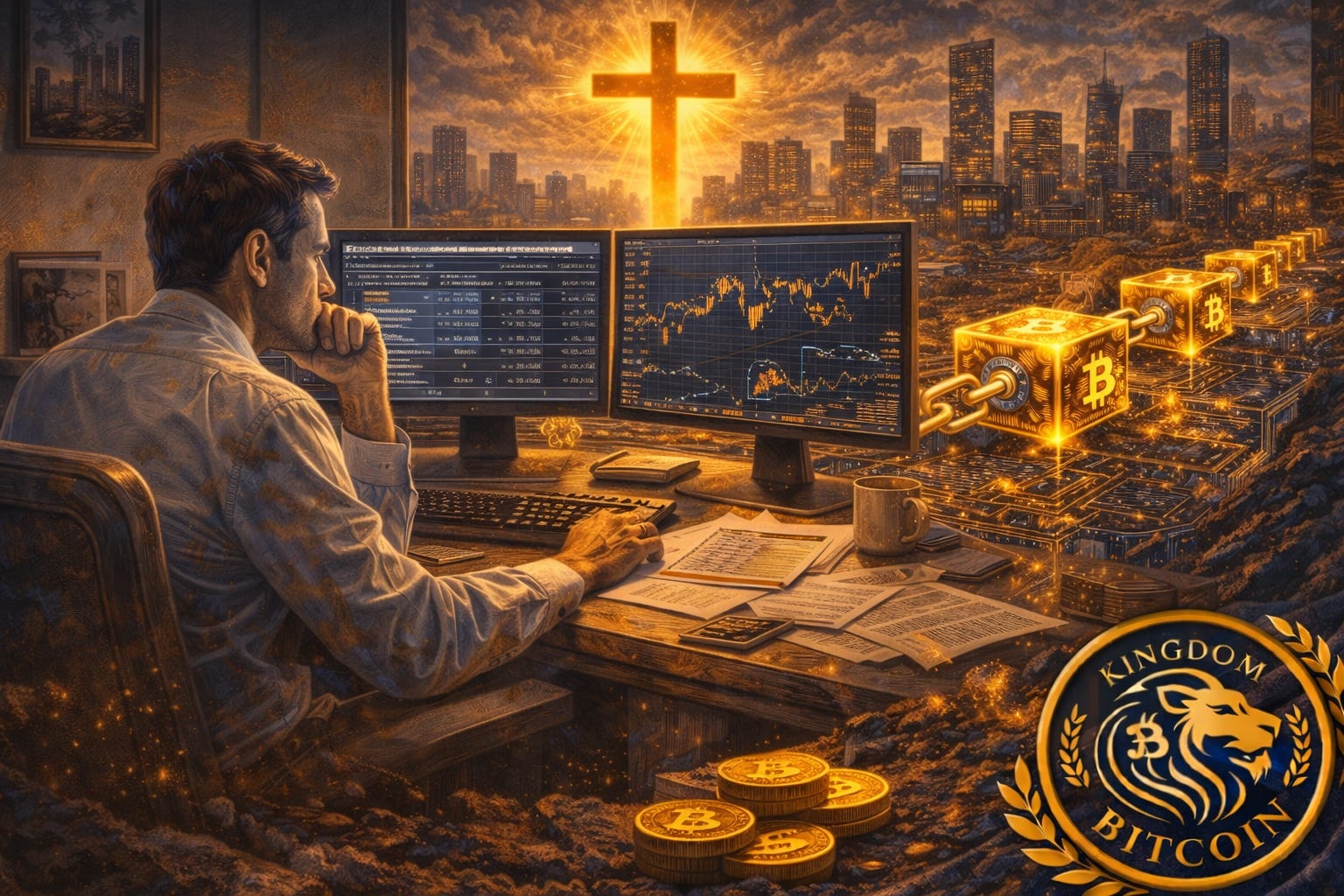
Years ago I met a trader who kept an unusual setup on his desk. One monitor displayed the usual parade of charts: equities, credit spreads, commodities, currencies. The other showed something far less glamorous. It was simply the Federal Reserve balance sheet.
Every Thursday afternoon, when the Fed released its weekly update, he would lean forward in his chair and stare at the numbers as if he were reading tide tables before sailing into open water.
Young traders visiting the desk assumed he was studying the charts for hidden patterns. In reality he barely looked at them.
“The candles are noise,” he once told me. “The balance sheet is the current.”
What he meant was simple but profound. Markets move constantly on the surface, but the forces that truly shape them operate quietly underneath. When investors focus only on price charts, they end up reacting to waves while ignoring the tide.
Bitcoin investors sometimes fall into this trap. They obsess over halving cycles, chart formations, and short-term volatility. Those elements matter, but they are not the deepest drivers of the market.
Bitcoin does not exist in isolation. It trades on a blockchain and follows a predictable issuance schedule, but it also breathes the same monetary oxygen as equities, credit markets, and global liquidity.
To evaluate bitcoin markets like an adult, you must zoom out far enough to understand the environment surrounding them.
Liquidity is the most powerful force in that environment.
When liquidity expands throughout the financial system, capital becomes abundant. Credit flows easily, investors grow comfortable taking risk, and assets across the spectrum tend to rise together. When liquidity contracts, the opposite occurs. Credit tightens, investors become cautious, and speculative assets often struggle.
This dynamic helps explain why bitcoin has shown such a strong correlation with the S&P 500 in recent years. Many observers treat that relationship as a contradiction, imagining bitcoin should somehow float above the forces affecting traditional markets.
But capital does not behave that way. It moves according to liquidity.
The Federal Reserve balance sheet is not trivia. It is plumbing.
When central banks expand their balance sheets through quantitative easing, reserves flood into the financial system. That liquidity eventually finds its way into equities, venture capital, real estate, and increasingly into bitcoin. When central banks reverse course and withdraw liquidity, financial conditions tighten and risk appetite fades.
History offers vivid reminders of how powerful monetary environments can be. In the late 1970s inflation in the United States had begun to spiral out of control. Prices were rising rapidly, confidence in the dollar was deteriorating, and the credibility of the Federal Reserve had eroded.
When Paul Volcker became chairman of the Fed in 1979, he confronted the problem with unusual resolve. Volcker allowed interest rates to rise to levels that today seem almost unimaginable. At one point the federal funds rate climbed above nineteen percent.
The consequences were painful. Credit collapsed, unemployment surged, and businesses struggled under the weight of expensive borrowing.
Yet Volcker understood something essential about markets and money. Monetary systems cannot function indefinitely without discipline. By restoring credibility to the dollar, he ultimately laid the foundation for decades of economic expansion.
Liquidity regimes shape entire eras.
Another moment when that truth became painfully clear arrived in 2008. In the years leading up to the global financial crisis, credit had expanded aggressively across the financial system. Mortgage lending exploded, leverage multiplied, and financial institutions constructed increasingly fragile towers of debt.
For a time the system appeared stable. Then it cracked.
When Lehman Brothers collapsed, trust evaporated almost overnight. Banks stopped lending to one another, credit markets froze, and institutions that had appeared immovable suddenly disappeared.
It was within that atmosphere of broken trust that a figure using the name Satoshi Nakamoto quietly released the Bitcoin white paper. The genesis block of the Bitcoin network contained a message referencing a newspaper headline from that moment in history.
“The Times 03/Jan/2009 Chancellor on brink of second bailout for banks.”
The line served as more than a timestamp. It was a diagnosis.
Bitcoin emerged from a moment when the global financial system revealed its fragility. Its design offered something radically different: a monetary network governed by transparent rules rather than discretionary authority.
Over time that architecture has begun to attract increasing capital. Bitcoin trades simultaneously in financial centers from New York to Singapore, and its liquidity reflects the broader dynamics of the international monetary system.
One of the most overlooked indicators in bitcoin markets is the trajectory of global money supply. Over long horizons global M2 tends to rise, but what matters most for markets is the rate at which liquidity accelerates or decelerates.
When global liquidity expands rapidly, capital seeks return and risk assets often flourish. When liquidity slows, financial conditions tighten and markets become selective.
This is not mystical. It is monetary physics.
Institutional capital has begun to recognize this reality. The introduction of spot bitcoin ETFs marked a structural shift in market access. For more than a decade institutions interested in bitcoin faced operational hurdles ranging from custody complexity to regulatory uncertainty.
The ETF structure removed many of those barriers. Pension funds, asset managers, and family offices can now allocate capital to bitcoin with the same operational ease as purchasing an index fund.
Large allocators influence markets not because they possess perfect foresight, but because they control vast pools of capital. Watching institutional flows can offer insight into momentum.
But wise investors resist the temptation to treat institutions as prophets. They are stewards operating within mandates, and they are just as capable of error as anyone else.
Scripture offers an even older lesson about economic cycles.
In the book of Genesis, Pharaoh dreams of seven fat cows followed by seven gaunt cows devouring them. The dream troubled him because it revealed a pattern he could not explain. Joseph interpreted the vision with remarkable clarity. Egypt would experience seven years of abundance followed by seven years of devastating famine.
Joseph’s counsel was simple but profound. During the years of plenty, Egypt must store grain and prepare for the years of scarcity that would inevitably follow.
It was not a prophecy of panic. It was a strategy of stewardship.
Markets move through similar seasons. There are years when liquidity expands and capital flows easily through the system. There are also years when credit tightens and financial conditions become difficult. Wise stewards recognize the season they are in and prepare accordingly.
Joseph understood something many modern investors forget: the purpose of abundance is preparation.
Scripture reinforces the same wisdom.
“The plans of the diligent lead surely to abundance, but everyone who is hasty comes only to poverty.”
- Proverbs 21:5
Diligence in markets does not mean predicting every price movement. It means studying cycles, understanding liquidity, and resisting the temptation to chase every wave of volatility.
Bitcoin itself is evolving. The early years of the network were driven largely by retail enthusiasm and technological curiosity. Today global capital flows increasingly shape its trajectory. That transition does not weaken bitcoin’s thesis. If anything, it confirms that the asset is gradually integrating into the broader financial system.
The disciplined investor eventually learns to focus less on daily waves and more on the forces shaping the tide. Central bank balance sheets matter. Global money supply matters. Currency dynamics matter. Institutional flows matter. Supply structure matters.
Yet even the most sophisticated analysis must ultimately be grounded in humility. Markets fluctuate. Monetary regimes change. Narratives rise and fall. Christ does not.
Discernment is not fear. It is disciplined attention. And disciplined attention, practiced patiently over years, compounds.
I sometimes think back to that trader staring quietly at the Federal Reserve balance sheet while everyone else argued about chart patterns and price targets.
He understood something that takes most investors years to learn.
The candles are not the current. Liquidity is.
Prayer 🙏📊✨
Heavenly Father,
Grant us wisdom to see beyond noise and the patience to steward what You entrust to us. Teach us to recognize seasons, to act with discipline, and to remain humble in the face of forces larger than ourselves.
Guard our hearts from haste, pride, and fear. Help us pursue knowledge with humility and stewardship with integrity. May our work reflect diligence, our decisions reflect wisdom, and our trust remain firmly rooted in You.
In Jesus’ name, Amen. 🙏🕊️