

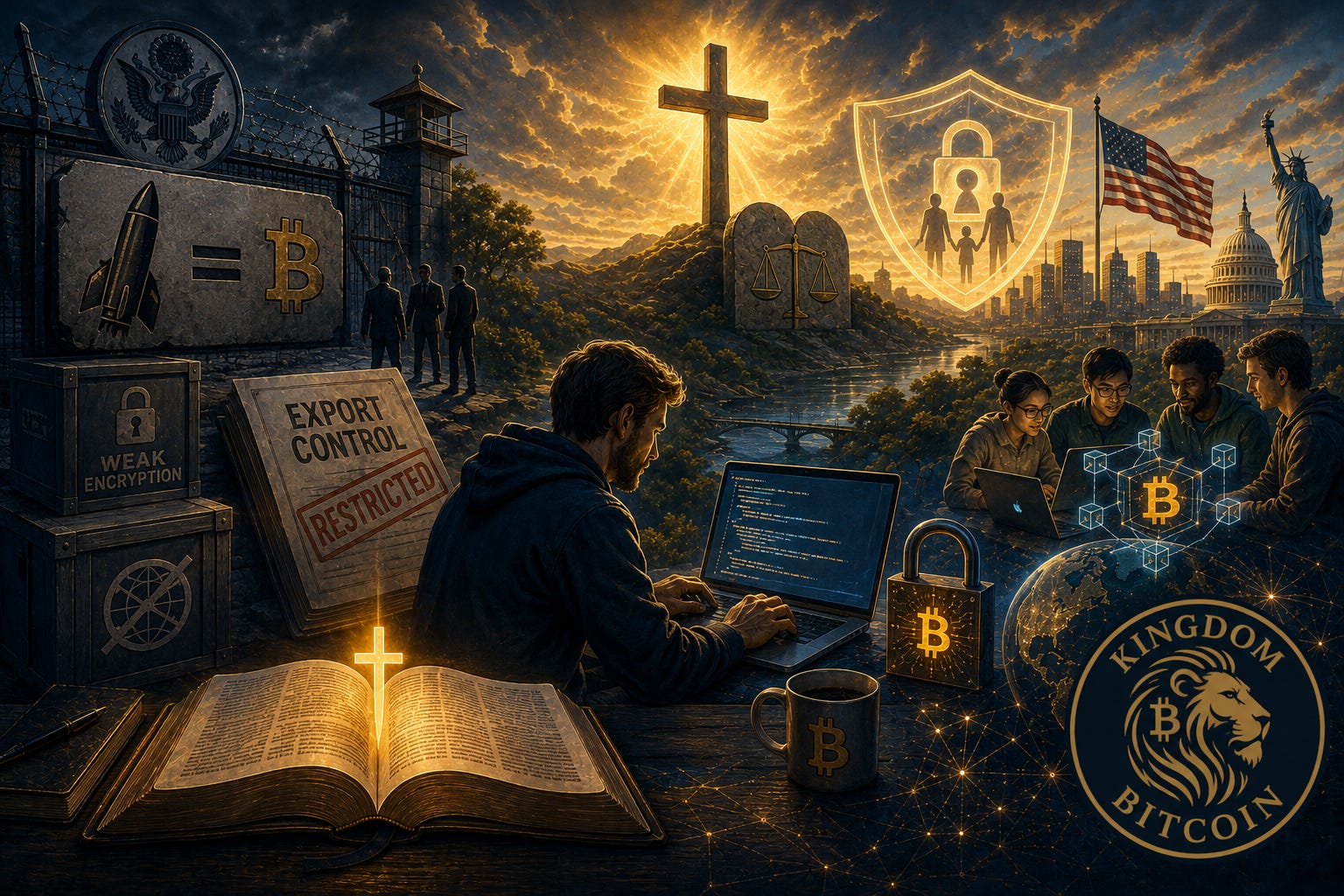
In the early days of the internet, Marc Andreessen and the Netscape team built strong encryption into software people could actually use. There was only one problem: the United States government classified that encryption under export rules alongside weapons. In practical terms, the browser was being treated in the same regulatory neighborhood as a Tomahawk missile. So Netscape had to ship deliberately weaker encryption overseas while foreign competitors simply built stronger products.
The absurdity almost writes its own punchline. Apparently the safest internet was the one nobody could safely use.
Government was trying to reduce risk. Instead, the policy created weaker security for legitimate users, encouraged competitors abroad, and pushed innovation away from the very country trying to control it. That story matters now because the same tension has returned around blockchains, open-source software, privacy, and developer liability.
Jesus told His disciples to “be as shrewd as snakes and as innocent as doves.” That is one of the best frameworks I know for thinking about technology policy. Wisdom without deceit. Freedom without naivety. Privacy without criminality.
Christians should be especially careful not to confuse privacy with secrecy. We close bathroom doors. Doctors protect medical records. Pastors conduct confidential counseling. Families do not staple bank statements to the mailbox so the neighborhood can enjoy a little transparency.
Privacy protects dignity. Secrecy hides accountability. Those are not the same thing.
This distinction matters because public blockchains are often far more transparent than most people realize. Transactions can be visible to anyone examining the ledger, which is why developers are working on privacy technologies that allow legitimate financial activity to remain private without making fraud invisible. Privacy is not inherently nefarious. Ordinary people need it precisely because ordinary life contains information that should not be broadcast to everyone.
Then comes the harder question. What responsibility belongs to the person who writes the software?
Imposing unlimited downstream liability on open-source developers would effectively kill the model. Reminder, small teams and unpaid developers cannot accept responsibility for every future act performed by every user of code they release.
The Christian answer should not be that builders have no responsibility. They do.
If someone intentionally creates a tool for criminal use, promotes illegal conduct, or knowingly participates in wrongdoing, “I only wrote the code” does not become a moral escape hatch.
But responsibility must remain connected to actual agency.
A carpenter is responsible for whether the chair he builds is sturdy. He is not automatically guilty because a thief later stands on that chair to climb through a window. Otherwise we eventually criminalize the hammer because Cain discovered blunt objects.
Scripture gives builders an honorable place.
In Exodus 31, God fills Bezalel and Oholiab with skill, intelligence, knowledge, and craftsmanship for the work they were called to perform. Their ability to create was not spiritually suspicious. It was a gift to be exercised faithfully.
Builders matter. Skill matters. Creating useful infrastructure matters.
That spirit also runs deep in the American story. Benjamin Franklin was printer, inventor, scientist, entrepreneur, and civic builder. Early America possessed an unusual confidence that experimentation, publication, and shared knowledge could strengthen human flourishing. The First Amendment tradition reflects a related instinct: free societies generally begin with the presumption that ideas may be expressed and tools may be created without prior permission, while still holding people accountable for actual crimes.
That balance is worth protecting.
Bitcoin itself emerged from open-source software. There was no Bitcoin Corporation issuing licenses. No executive committee deciding who was sophisticated enough to participate. No product manager approving the countries where the network could operate.
The code was published. People could inspect it. Challenge it. Reject it. Improve it. Build around it. That openness is one reason Bitcoin survived.
Open source does not guarantee virtue. Bad code can be published. Criminals can use useful tools. Developers can behave irresponsibly. But suppressing creation because misuse is possible misunderstands the nature of human agency.
Almost every powerful technology can be used for both good and evil. Encryption can protect a dissident or hide a criminal. A car can take a family to church or a robber away from a bank. The internet can deliver Scripture across the world or spread deception before breakfast.
The moral question is not whether misuse can occur. It is whether responsibility is assigned truthfully.
Freedom requires accountability, but accountability must remain connected to actual responsibility. And if America can protect builders while still punishing genuine wrongdoing, one larger question remains.
Where will the systems those builders create actually be built?
That is what I will answer tomorrow…
Kingdom Principle 👑
Freedom requires accountability, but accountability must remain connected to actual responsibility.
God gives human beings creativity, intelligence, and skill, but those gifts are never detached from moral responsibility. Builders should be judged by what they knowingly create, encourage, and participate in, not by every unforeseeable act committed by every later user of a general-purpose tool.
At the same time, privacy should never become a cloak for deception. Biblical freedom is neither surveillance nor secrecy. It is the space to act responsibly beneath truth, law, conscience, and ultimately the authority of God.
Prayer 🙏
Heavenly Father, give wisdom to the builders shaping the technologies our children will inherit and to the leaders writing the laws around them. Protect us from fear that suppresses useful creation and from pride that treats technical ability as freedom from moral responsibility.
Teach us to honor privacy without hiding sin, encourage innovation without excusing wrongdoing, and create laws that are proportionate, truthful, and just. Bless developers, entrepreneurs, researchers, and craftsmen who use their gifts to serve human flourishing. May every invention remain beneath the lordship of Jesus Christ and every freedom be exercised in love.
In Jesus’ name, Amen. 🙏📖🔐💻₿🕊️👑