

In the autumn of 2008, the lights remained on inside the great towers of finance, but trust was disappearing floor by floor.
Banks stopped lending to one another. Credit markets froze. Institutions that had appeared permanent suddenly looked fragile. Families watched retirement accounts fall, businesses lost access to capital, workers lost jobs, and homeowners opened letters telling them they might lose the place where their children slept. The crisis was discussed through balance sheets, liquidity facilities, and emergency legislation, but ordinary people experienced it through fear.
Then came the rescues.
Governments intervened because leaders believed the collapse of major financial institutions could pull the entire economy into something worse. Trillions of dollars in support, guarantees, loans, and monetary expansion were deployed to stabilize the system. Some intervention may have prevented a deeper catastrophe. Yet millions of people were left with an unsettling lesson: when the system failed, the institutions closest to power were rescued first, while households absorbed unemployment, foreclosure, lost savings, and years of uncertainty.
The profits had been private. The losses became public.
Into that atmosphere came a nine-page paper from someone no one could identify.
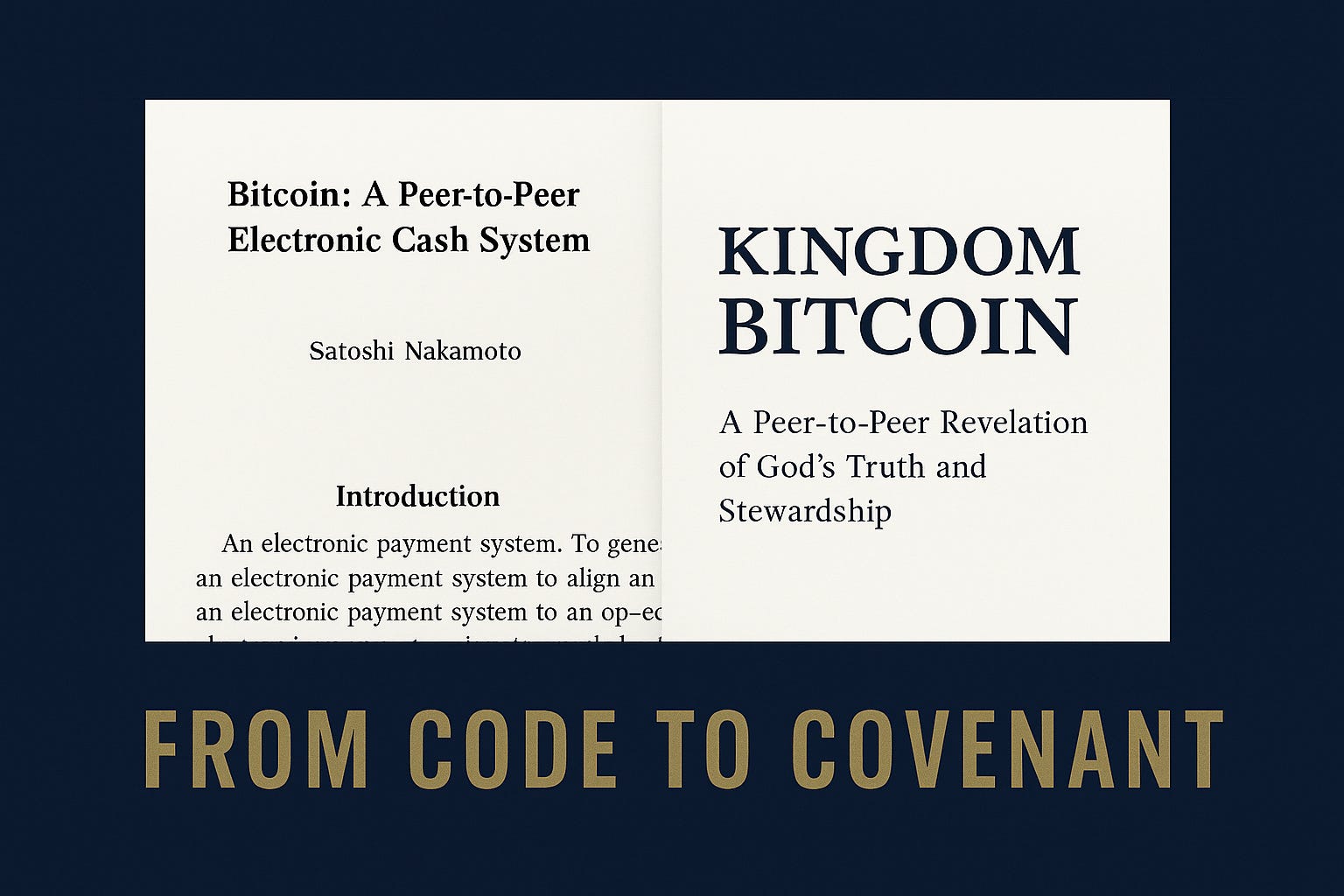
On October 31, 2008, a person or group using the name Satoshi Nakamoto published “Bitcoin: A Peer-to-Peer Electronic Cash System.” The paper did not arrive with a marketing campaign, government endorsement, celebrity founder, or investment bank. It proposed something much quieter and more disruptive: a way for two people to transfer digital value directly without requiring a financial institution to maintain the official record between them.
A few months later, in January 2009, the Bitcoin network began operating.
The timing matters. Bitcoin did not emerge from a season of abundant institutional confidence. It appeared while the credibility of modern finance was cracking. Its first block even contained a reference to a newspaper headline about another bank bailout, permanently connecting bitcoin’s beginning to the crisis surrounding it.
Bitcoin did not repair every injustice revealed in 2008. It did not restore lost homes, replace missing pensions, or make powerful institutions morally accountable. It did something more foundational. It asked whether money could move through a system where the truth of the transaction did not depend upon one central bookkeeper.
That is the meaning behind bitcoin’s most misunderstood description: trustless.
Trustless does not mean that no trust exists anywhere. A person using bitcoin still depends upon software, hardware, security practices, electricity, communication networks, and personal understanding. A careless user can lose access. A dishonest exchange can still steal customer funds. A compromised device can still expose private keys. Bitcoin does not remove human responsibility or make wisdom unnecessary.
Instead, bitcoin changes where trust is placed.
In the traditional financial system, account balances and transaction histories are maintained by institutions. A bank decides whether your payment is valid, whether funds are available, whether a transfer may proceed, and whether a transaction should be reversed. That arrangement can be convenient and useful. It also means the institution controls the record upon which your claim depends.
Bitcoin replaces that central dependency with verifiable rules.
The protocol defines what counts as a valid transaction. The asset called bitcoin carries value through the system. The network communicates, checks, and confirms the state of the ledger. Participants do not need to know one another, share the same politics, live under the same government, or place personal faith in a single administrator. They need only follow rules that are public and independently verifiable.
This is where the language of light becomes important.
In Genesis, God speaks into darkness: “Let there be light.” Light does not merely illuminate what is beautiful. It reveals what darkness had concealed. It distinguishes. It exposes. It allows creation to be seen as it truly is.
Bitcoin brought a similar kind of visibility to money. Its code could be examined. Its issuance schedule could be known. Its transaction history could be independently verified. Its rules were not reserved for insiders with privileged access to a private ledger.
This does not mean every aspect of Bitcoin is perfectly transparent. Addresses are visible, but the people behind them may not be. Users can still act dishonestly around the network. Exchanges can misrepresent reserves. Promoters can sell lies. Light does not eliminate sin. It removes some of sin’s hiding places.
Jesus said, “Then you will know the truth, and the truth will set you free.” He was speaking about a freedom far greater than financial independence. Christ frees humanity from sin, deception, and death. Bitcoin cannot do that. No network, asset, or technology is salvific.
But the principle remains instructive. Freedom grows where truth can be known.
My white paper uses a three-part teaching image. The protocol provides structure. Bitcoin provides the monetary asset. The network communicates and verifies the state of the ledger. This pattern can remind us that creation often displays order, embodiment, relationship, testimony, and unity.
It must remain an analogy, not an equivalence.
The Father, Son, and Holy Spirit are the eternal, living God. Bitcoin is human-built technology operating within creation. It should never be worshiped, treated as revelation equal to Scripture, or presented as a substitute for Christ. Yet technology can still reveal patterns that help us think more clearly about truth, order, and testimony.
That is the deeper lesson of Bitcoin’s emergence.
The system did not ask people to trust that a powerful institution would always act honestly. It gave people tools to verify whether the rules had been followed. It did not eliminate trust. It made blind trust less necessary.
When the financial world went dark, Bitcoin did not arrive as a savior.
It arrived as a light.
Once value can move without a central bookkeeper, the next question becomes unavoidable: where is the record kept, and how can that record remember without being rewritten?
Kingdom Principle 👑
Truth creates freedom because what can be verified does not have to be blindly trusted.
God repeatedly brings what is hidden into the light. He exposes falsehood not merely to condemn, but to restore what deception has damaged. Bitcoin reflects a limited version of that principle by allowing monetary rules and transactions to be independently examined rather than accepted solely upon institutional authority.
Yet verification is not salvation. Bitcoin can help reveal whether a transaction follows the rules, but only Jesus Christ can reveal and transform the human heart. As faithful stewards, we should welcome transparency while remembering that no technology can replace truth embodied in Christ.
Prayer 🙏
Heavenly Father, You spoke light into darkness and order into chaos. Shine Your truth into every system built upon secrecy, manipulation, and misplaced trust. Give us wisdom to examine what we are told, humility to admit what we do not understand, and courage to pursue truth even when it exposes institutions, assumptions, or habits we have trusted for years.
Protect us from placing our faith in technology, markets, governments, or human intelligence. Teach us to use every tool with discernment and to recognize the difference between a system that verifies transactions and a Savior who redeems souls. May Bitcoin help us better understand transparency and responsibility without ever becoming an idol in our hearts.
Let Your light govern our finances, relationships, decisions, and stewardship. Expose deception, restore trust where truth has been abandoned, and keep us anchored in Jesus Christ, the Light of the world, whose truth alone brings eternal freedom.
In Jesus’ name, Amen. 🙏📖💡₿🕊️👑