

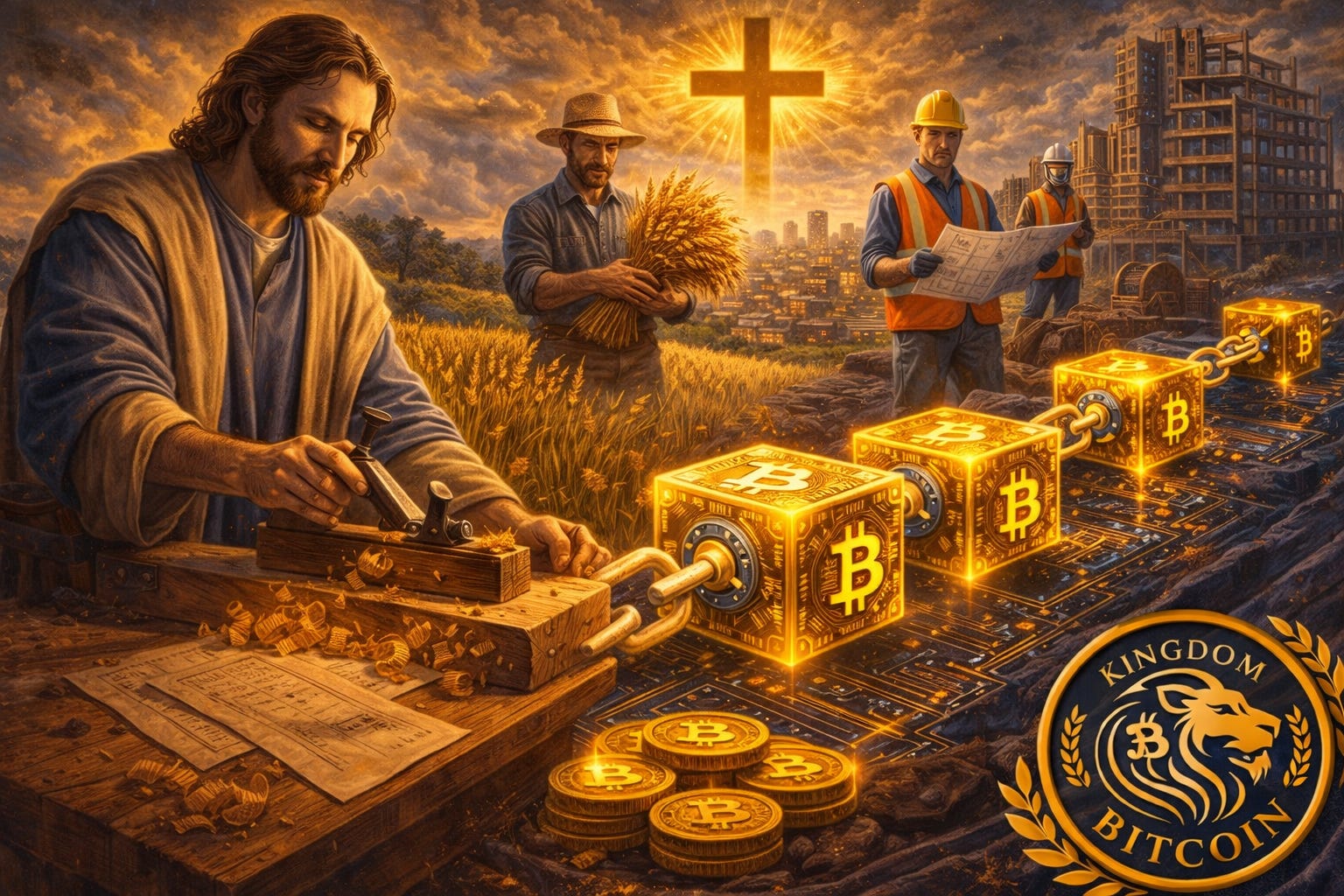
One of the most dangerous ideas circulating in modern culture is the belief that work is a burden.
The story being told is subtle but powerful.
Work is something to escape.
Retirement is the goal.
Meaning is found somewhere outside productive effort.
Scripture teaches the exact opposite. Work existed before sin entered the world.
Genesis tells us that God placed Adam in the garden “to work it and keep it.” This command appears before the Fall, before the curse, before brokenness entered creation.
Work was not punishment. Work was part of the design. Human beings were created to cultivate, build, invent, steward, and serve. We were created to produce. The marketplace often forgets this and if we are honest, the church sometimes forgets it too.
A strange division has crept into modern thinking. We imagine that ministry is sacred while business is secular. We speak about success and significance as though creating value in the marketplace somehow belongs in a lower category of importance.
The Kingdom of God is not divided that way. God created the material world and declared it good. Christ Himself spent the majority of His earthly life working with His hands as a carpenter before beginning His public ministry.
The incarnation itself teaches something profound. The physical and the spiritual are not enemies. Grace does not destroy nature. Grace restores it. That restoration includes our work and ultimately our productivity over consumption.
When markets function properly they are simply mechanisms of service. Entrepreneurs succeed not through coercion but through observation. They see human needs and move to meet them. The most productive individuals in society are often the ones paying the closest attention to the people around them.
Productivity, at its best, is service scaled through cooperation. This is where money becomes incredibly important.
Money is the measuring instrument of economic cooperation. It allows millions of strangers to coordinate their labor without force. It communicates value across distance and across time.
A farmer grows wheat.
A builder constructs homes.
An engineer designs machines.
A teacher forms young minds.
Money allows all of these forms of work to cooperate with one another. What happens when the measuring instrument itself becomes unreliable?
When money loses integrity, the signals that guide productivity become distorted. Effort becomes disconnected from reward. Savings become vulnerable to quiet erosion. The incentives that guide human creativity begin to warp.
Scripture speaks clearly about this danger.
“Shall I acquit a man with dishonest scales and with a bag of deceitful weights?”
- Micah 6:11
This language is not economic jargon. It is moral language.
A society that manipulates its measurements eventually damages its productivity. The measuring stick begins to drift. Trust erodes. And when trust erodes, cooperation becomes fragile.
This is where bitcoin enters the conversation.
Bitcoin restores integrity to the measuring instrument. Its monetary policy cannot be quietly expanded. Its rules are transparent. Its issuance schedule is known in advance. No central committee meets behind closed doors to adjust its supply.
But bitcoin does something even more profound. It connects money directly to work.
Bitcoin is secured through a process called proof of work. Energy is expended. Computation is performed. Real resources are committed to secure the network.
In other words, work protects the integrity of the money itself.
Electricity is transformed into security. Computation becomes verification. The physical world anchors the digital one.
This is not accidental. It is structural. Bitcoin is the first monetary system in human history where the security of money is explicitly tied to the expenditure of real work.
From the garden of Genesis to the proof-of-work architecture securing bitcoin today, the same truth emerges: enduring value is born from disciplined labor, not effortless creation.
The Founding Fathers understood this connection between labor, virtue, and prosperity. Benjamin Franklin wrote often about diligence and industry as the foundation of a flourishing society. A republic built on liberty required citizens who were productive, responsible, and capable of stewarding their resources wisely.
Honest work was not merely economic activity. It was a moral discipline that sustained freedom itself.
In an age where many financial systems allow value to be created through policy decisions alone, bitcoin quietly insists on something older and more fundamental.
Work must come first and disciplined money encourages disciplined civilization.
When people know that their savings cannot be quietly diluted, they think differently. They plan differently. They build differently. They begin to think in decades instead of quarters.
Scripture celebrates exactly this type of stewardship.
“The plans of the diligent lead surely to abundance.”
- Proverbs 21:5
Diligence.
Productivity.
Stewardship.
These are not merely economic virtues. They are Kingdom virtues. Bitcoin does not redeem human nature. Christ alone redeems humanity.
Honest money can support the kind of productive civilization where families flourish, entrepreneurs serve their communities, and generational stewardship becomes possible again.
In a culture increasingly obsessed with escaping work, Christians should remember something simple.
Work was God’s idea. When money is honest, work becomes fruitful again.
Prayer 🙏⚡🕊️
Dear Father,
Thank You for creating us in Your image and giving us the ability to build, cultivate, and serve.
Guard our hearts from laziness and from the lie that our work does not matter to You. Teach us to steward our talents faithfully and to pursue diligence in the work placed before us. Restore integrity to the systems that measure value in our world.
And remind us that our ultimate purpose is not wealth or success, but faithful service to You and love for our neighbors through the work You have placed before us.
In Jesus’ name, Amen. 🙏⚡🕊️
So good!