

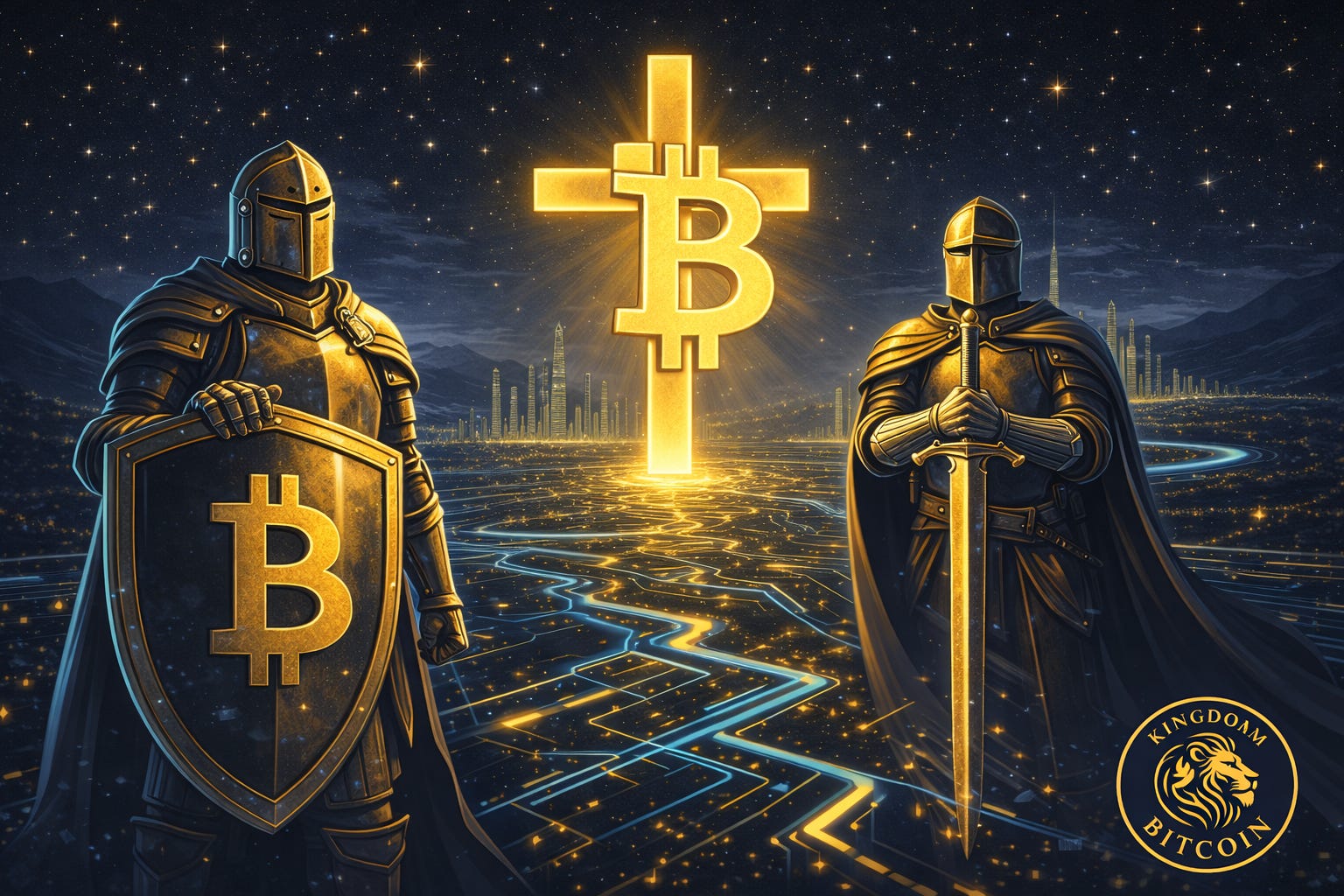
There is a quiet confusion shaping one of the most important conversations of our time. It sounds small, almost harmless, yet its consequences are anything but. bitcoin is being grouped into a category called “crypto,” and in that single act of simplification, something essential is lost. When everything is treated as the same, nothing is properly understood. Categories blur, distinctions fade, and with that loss of clarity comes a loss of discernment. And when discernment disappears, people do not simply become confused. They become vulnerable.
We are now living in a world where millions of digital assets exist. Some estimates suggest there are well over 120 million tokens across various ecosystems, while on-chain data sources like Dune have tracked tens of millions created with minimal effort. The vast majority of these will not endure. Many were never intended to. They are experiments, iterations, cultural expressions, and in many cases, speculative instruments designed for velocity rather than durability. Some are innovative. Some are clever. Many are simply noise. The sheer scale of creation should not inspire confidence. It should invite caution.
I have had a front-row seat to this world. During my time building the crypto and blockchain business at AWS, I worked alongside founders and developers across nearly every major chain. Builders are curious by nature. They are driven to explore, to test, to push boundaries, and to create new systems. That instinct deserves respect. Innovation has its place. But innovation, by itself, does not make something money. And creation does not guarantee permanence. The distinction between building and storing value is one that must be clearly understood if we are to navigate this landscape wisely.
Bitcoin stands apart from this broader ecosystem in ways that are often understated or overlooked entirely. It has no founder who benefits from its success. No central authority that can alter its rules. No supply that can be expanded to accommodate demand or policy. Its design is fixed. Its issuance is known. Its limit is absolute. Twenty-one million. Not more. Not later. Not subject to revision. This is not simply a feature of the system. It is the foundation upon which the system rests.
That foundation matters because money is not merely a tool for exchange. It is a standard of measurement. And Scripture speaks directly to the integrity of measurement.
“Differing weights and differing measures, the Lord detests them both”
— Proverbs 20:10, (NIV)
This is not a narrow instruction about ancient marketplaces. It is a principle that extends across time. Measurement must be honest. Scales must be true. When value is manipulated, trust is broken, and when trust is broken, relationships and systems begin to deteriorate.
When bitcoin is grouped together with everything else labeled as “crypto,” we are not simply using convenient language. We are distorting the scale. We are placing fundamentally different instruments on the same measure and presenting them as equivalent. They are not. The difference is not cosmetic. It is structural, philosophical, and moral. To ignore that difference is to mislead, even if unintentionally.
A more fitting comparison would be to place the Constitution beside a stack of casino chips and describe them both as instruments of value. One is designed to restrain power, to endure, and to provide a stable foundation for generations. The other is designed for rapid exchange, speculation, and short-term engagement. Both have their place, but they do not serve the same purpose. To treat them as interchangeable is to misunderstand both.
This is not a dismissal of the broader ecosystem. It is a call to clarity. Builders will continue to build. New ideas will continue to emerge. Markets will continue to experiment. But stewardship requires more than participation. It requires understanding. And understanding begins with the ability to distinguish what something is, what it is not, and what it was designed to do.
The conversation must mature because the stakes are rising. Capital is entering. Institutions are allocating. Families are beginning to consider long-term positioning. Even churches are starting to ask how these technologies fit within their stewardship frameworks. If we fail to define things correctly now, we risk building conviction on a foundation of confusion. And confusion, when compounded over time, becomes costly.
The Founding Fathers understood the importance of clarity in systems that govern value. They did not treat money as a casual instrument or a flexible policy tool. They treated it as a matter of moral consequence. The structures they put in place were designed to constrain power, not expand it. They recognized that when money can be manipulated, people can be manipulated, and when standards weaken, trust erodes. Their concern was not simply economic. It was ethical.
Bitcoin, whether one agrees with it or not, reintroduces a principle that has largely been absent from modern monetary systems. Constraint. And constraint, properly understood, is not a limitation. It is a form of protection. It protects value from dilution. It protects time from erosion. And it protects future generations from inheriting systems that have been quietly compromised.
This is why the distinction matters. Not because of price movements or market cycles, but because of truth. If you cannot clearly define what you own, you cannot steward it. If you cannot distinguish between categories, you cannot protect yourself or those entrusted to your care. And if you cannot recognize honest measurement, you will eventually accept a dishonest one.
Bitcoin is not crypto. Until we are willing to say that with clarity and conviction, we will continue to confuse what is built to endure with what was never designed to last.
Kingdom Principles
• Truth requires distinction
• Honest measures honor God
• Stewardship demands understanding
• Foundations determine outcomes
Prayer
Heavenly Father,
You are a God of truth, order, and clarity. You do not deal in confusion, and You do not bless dishonest scales.
Give us discernment in a world full of noise. Help us to see clearly what is true and what only appears to be. Teach us to be wise stewards of what You have entrusted to us, not driven by emotion, but grounded in understanding.
Guard our hearts from chasing what is temporary, and anchor us in what endures. Let us walk in integrity, honoring You not only in what we believe, but in how we measure, steward, and act.
May our decisions reflect wisdom, patience, and truth that stands the test of time.
In Jesus’ name, Amen. 🙏✝️🔥