

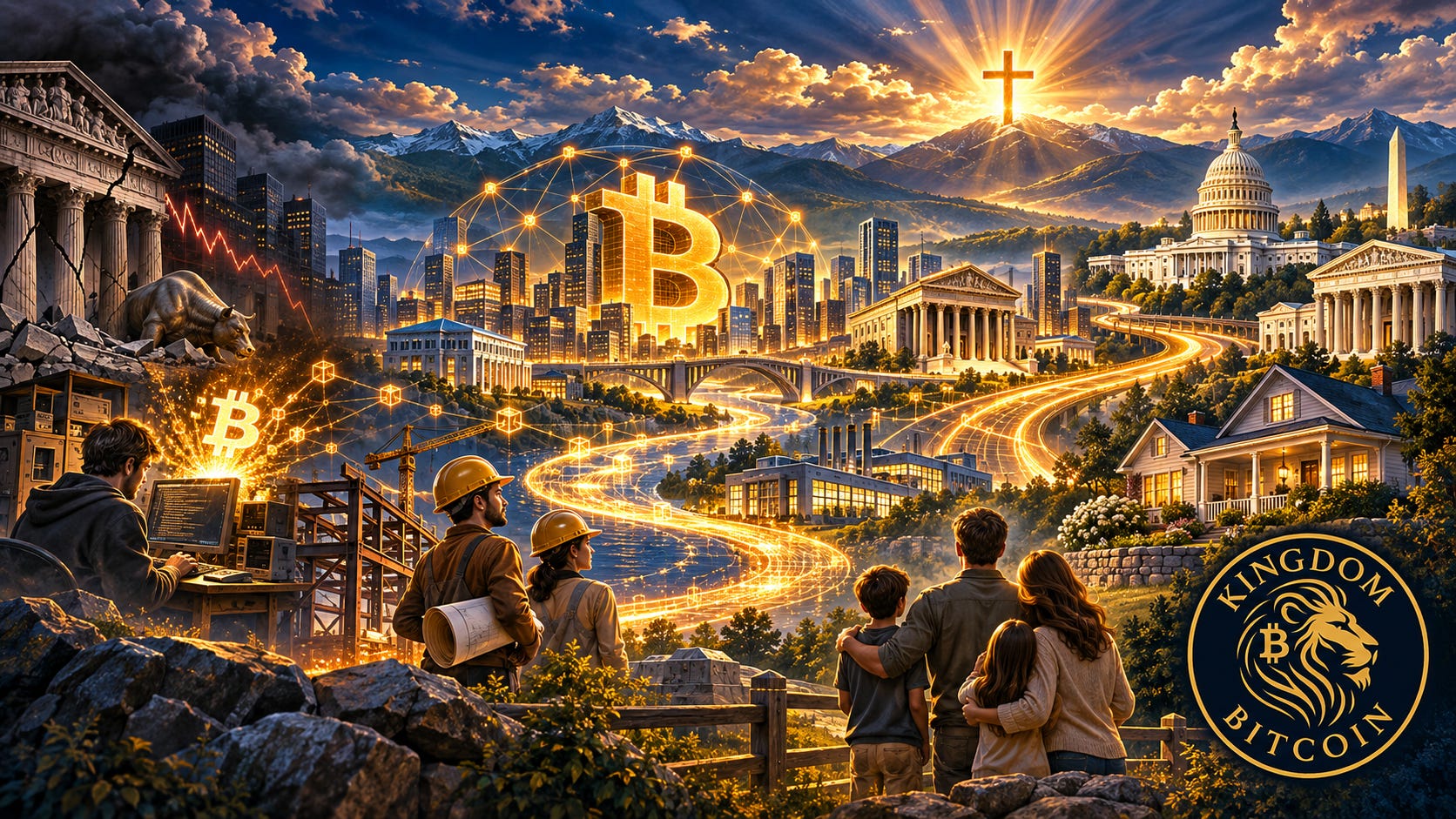
Bitcoin and the American Dream traces how four presidential administrations, Congress, regulators, and Wall Street shaped Bitcoin’s journey from an obscure experiment to a consequential American financial asset. In this ten-part series, we examine what each administration got right, what it got wrong, and whether America protected the freedom to build.
When Donald Trump returned to the White House in January 2025, American digital-asset entrepreneurs were watching closely. Many had spent the previous four years navigating lawsuits, banking uncertainty, restrictive accounting guidance, and a regulatory environment that often seemed more interested in discouraging their businesses than understanding them. Some had moved operations overseas. Others had remained in America, hoping the country that pioneered modern technology would remember how to welcome its builders. The question was whether Washington would finally distinguish financial innovation from financial misconduct.
The answer began arriving almost immediately. On January 23, President Trump signed Executive Order 14178, reversing Biden’s digital-asset executive order, rejecting the development of a United States central bank digital currency, and establishing a presidential working group on digital-asset markets. The administration announced its intention to make America a global center for digital finance. After years of regulatory hostility, the change in direction was unmistakable. Entrepreneurs were being told that their country wanted them to build here again.
I believe that message matters enormously. The American Dream does not begin with a government grant or a regulator’s permission slip. It begins when free people recognize an opportunity, risk their capital, and create something useful for others. Government should establish clear rules, punish fraud, protect property, and then allow competition to determine which businesses succeed. Washington does not need to invent the next great American company. It needs to stop unnecessarily preventing someone else from doing so.
The administration followed its rhetoric with significant actions. The Securities and Exchange Commission rescinded Staff Accounting Bulletin 121, removing a controversial accounting obstacle to digital-asset custody. Banking regulators began withdrawing restrictive guidance, while the FDIC released documents revealing earlier supervisory pressure on banks considering cryptocurrency activities. The Justice Department announced a shift away from using criminal prosecution as a substitute for financial regulation and disbanded its National Cryptocurrency Enforcement Team. These were meaningful changes in federal policy, not simply campaign promises.
But reversing an excessive restriction does not eliminate the need for accountability. Exchanges must protect customer assets, banks must manage operational risk, and fraudsters must face consequences. The collapse of FTX demonstrated what happens when customers trust executives who treat entrusted property as their personal treasury. A free market cannot function without honest contracts and enforceable property rights. Capitalism requires freedom, but freedom becomes durable when dishonesty carries consequences.
Then came March 6, 2025. President Trump signed an executive order establishing the Strategic Bitcoin Reserve, directing the federal government to retain certain forfeited bitcoin rather than automatically selling it. The order also contemplated budget-neutral strategies for acquiring additional bitcoin, subject to applicable law. For the first time, an American president formally recognized Bitcoin as a potential strategic government asset. That represented a remarkable reversal from Trump’s own skepticism during his first presidency.
The decision also exposed an expensive lesson from American history. Washington had previously auctioned substantial amounts of forfeited bitcoin, including approximately 29,656 BTC in June 2014. At $65,000 per coin, that first auction’s bitcoin alone would represent roughly $1.93 billion today. The government received approximately $19 million at the time. Not every forfeited asset could legally have been retained, and hindsight does not erase the obligations of public officials. Nevertheless, future generations deserve a government capable of examining long-term value before disposing of potentially strategic property.
There was an important limitation. By November 2026, the reserve had not become a confirmed federal Bitcoin purchasing program, and questions remained about its inventory, audit, acquisition authority, and implementation. An executive order can establish policy, but it cannot automatically appropriate funds or override federal law. A strategic reserve deserves transparent accounting and a durable legal foundation. Calling something strategic is easier than governing it strategically.
Congress delivered a more lasting achievement in July 2025. The GENIUS Act passed the Senate and House with bipartisan support before President Trump signed it into law. The legislation established a federal framework for payment stablecoins, including reserve requirements involving cash and short-term government obligations. Stablecoins are not Bitcoin, and the distinction is essential. Yet the law demonstrated that Congress could establish meaningful digital-asset rules rather than leaving the entire industry dependent upon shifting agency interpretations.
There is also an economic irony worth examining. Dollar-backed stablecoins can increase demand for United States Treasury securities, potentially strengthening the dollar’s international reach while helping finance federal borrowing. That creates opportunity for American financial innovation, but it should not distract us from Washington’s underlying debt problem. A new buyer for Treasury bills is not a substitute for fiscal discipline. America cannot borrow its way into permanent prosperity simply because the borrowing now travels through blockchain infrastructure.
The founders understood that public credit and private enterprise must serve the nation’s long-term interests. Alexander Hamilton recognized the importance of credible financial institutions. George Washington warned Americans against allowing public debt to burden posterity unnecessarily. Ronald Reagan championed the creative power of free people and understood that government should serve citizens rather than command their ambitions. Their example reminds us that national leadership requires both economic freedom and financial responsibility.
Scripture provides a fitting foundation in Proverbs 16:11: “Honest scales and balances belong to the Lord; all the weights in the bag are of his making.” The passage teaches integrity in measurement and commerce, not divine approval of a particular currency or political administration. Its principle applies to regulators, entrepreneurs, lenders, and public officials alike. God expects honesty from the person creating the rules and from the person operating under them.
I applaud President Trump initial intentions for reversing policies that discouraged legitimate American innovation and for recognizing Bitcoin’s strategic importance. Those actions deserve credit. Yet the work remains unfinished because executive orders can be reversed, agency guidance can change, and the next administration may choose a different direction. Further, there are questions that I will review later in this series on Trump and his family’s intentions within the digital asset industry. The American Dream needs more than a friendly president. It needs laws that preserve freedom regardless of who wins the next election.
Kingdom Principle 👑
Government strengthens the American Dream when it protects honest enterprise, restrains abuse, and creates lasting conditions for free people to build.
The return of a more welcoming federal policy demonstrated how much government decisions can influence economic opportunity. Removing unnecessary barriers allows entrepreneurs to devote more resources to building useful products rather than defending themselves against regulatory uncertainty. Clear laws provide the confidence required for long-term investment, employment, and innovation.
But faithful stewardship requires us to distinguish a policy announcement from an enduring accomplishment. A strategic reserve must be properly accounted for. A regulatory reversal should become a fair and durable legal framework. A government committed to innovation must remain equally committed to protecting customers and enforcing honest contracts.
Jesus teaches that a house built upon rock withstands the storms that expose weaker foundations. America’s economic future should not depend upon the temporary goodwill of any president or political party. God calls us to build upon truth, while the Holy Spirit gives wisdom, discernment, and restraint to those entrusted with authority. Strong institutions should protect the freedom of future generations, not merely celebrate the victories of the present administration.
Prayer 🙏
Heavenly Father, thank You for the freedom to build, create, invest, and pursue opportunity in America. Thank You for leaders willing to recognize when government has exceeded its proper role and for entrepreneurs who persevered through uncertainty. Give our nation the wisdom to establish clear, fair, and lasting laws that protect honest enterprise without sheltering fraud or corruption.
Lord Jesus, guide President Trump, Congress, regulators, and every public official entrusted with shaping America’s financial future. Help them recognize that political authority is temporary, but the consequences of their decisions may reach generations beyond their own. Give them courage to defend property rights, humility to acknowledge mistakes, and discipline to steward public resources responsibly.
Holy Spirit, strengthen America’s builders and the families whose futures depend upon a thriving economy. Protect us from confusing political promises with lasting security or financial innovation with moral virtue. Teach us to pursue prosperity through honest work, responsible investment, and service to others, always placing technology beneath stewardship and stewardship beneath God.
May America remain a nation where government protects the freedom to build, truth governs the rules, and opportunity belongs to the next generation as much as our own. In Jesus’ name, Amen. 🙏📖🇺🇸🏛️⚖️🛠️🏗️💼🏠₿🕊️👑