

James Madison knew the house needed locks.
He was not the sort of man who filled a room by force of personality. Madison was slight, often physically fragile, and more inclined to study than performance. He did not possess Washington’s commanding presence or Hamilton’s restless thunder. Yet on the page, Madison carried a different kind of authority. He could see systems the way a builder sees beams behind walls. Where others admired the visible structure, Madison kept asking what load it could bear.
By the time he wrote Federalist 51, the Constitution had been drafted but not secured. The house had been framed, but the people still had to agree to live in it. The room around him was quieter than Philadelphia had been. No delegates argued across tables. No summer heat pressed against closed windows. Now came the colder labor of persuasion. Somewhere beyond his desk, Brutus was still in the air, warning Americans that power had a way of gathering to itself. Madison did not dismiss that warning because he understood the fear beneath it.
The question before him was not whether liberty was beautiful. The question was whether liberty could survive human nature. That is the question every serious system must eventually answer. A nation may speak nobly about freedom, but if its structure assumes people will always act with restraint, the structure has already begun to fail. Madison had studied failed republics closely enough to know that ambition does not disappear when men use patriotic language. It often learns to wear it.
So Madison reached for his pen and wrote one of the most honest sentences in political history: if men were angels, no government would be necessary.
The sentence endures because it tells the truth without flattering or despising us. Human beings are capable of courage, invention, repentance, sacrifice, and love. We can build cathedrals, write constitutions, defend strangers, forgive enemies, and give our lives for people we will never meet. We are made in the image of God, and the dignity of that truth is beyond measure. Yet we are also fallen, and the same hands that build can grasp, distort, hide, excuse, and bend reality toward the self.
Federalist 51 became the parchment of anthropology in the American tradition. The Declaration told us where rights come from. The Constitution structured power. The Bill of Rights guarded liberty. Federalist 51 told us what the Founders believed about man. It looked at humanity without romance and without contempt, and it built accordingly.
Every system eventually reveals its theology.
That may be one of the most important truths in public life. A government reveals what it believes about authority. A market reveals what it believes about desire. A monetary system reveals what it believes about trust. A household reveals what it believes about responsibility. Systems are never spiritually neutral because systems are built on assumptions about people. The question is whether those assumptions are true.
Genesis 3 is where the Bible first tells the truth about the human heart in story form. The garden was ordered and good. Rivers watered the land. Trees rose from soil God had made. Adam and Eve received abundance, companionship, work, and permission to cultivate what had been entrusted to them. Their freedom was real, but it had a form. God gave them a boundary, and the boundary was not cruelty. It was mercy.
A boundary reminds the creature that he is not the Creator.
The serpent’s suggestion was subtle because temptation often begins as reinterpretation. Perhaps the boundary was not mercy. Perhaps it was deprivation. Perhaps God was withholding something necessary for fullness. The fruit became more than fruit in that moment. It became a question of authority. Who defines good? Who defines evil? Who decides where the line belongs?
The first misuse of freedom was not merely the taking of fruit. It was humanity attempting to become the scale.
That rebellion moved outward from the garden into every sphere of human life. Families, cities, empires, courts, banks, markets, governments, and technologies all carry echoes of that first grasping after autonomy. Whenever human beings reject limits as insults, whenever power convinces itself that accountability is unnecessary, whenever brilliance forgets humility, Genesis is happening again in another form.
Madison’s political genius was that he understood this without needing to name it theologically on every page. He did not think men were monsters, and the American experiment could not have been built by men who believed humanity was only corrupt. But neither did he imagine that virtue would naturally govern every officeholder, every faction, or every future generation. The Founders believed human beings were dignified enough for self-government and fallen enough to require restraint.
Jeremiah’s words are severe because they are protective: the heart is deceitful above all things. Romans says the same truth with apostolic force: all have sinned and fall short of the glory of God. Those verses do not erase human dignity. They explain why dignity must be guarded by truth. A dishonest view of man produces dangerous systems. If we pretend people are angels, we build structures too weak to restrain ambition. If we pretend people are beasts, we build structures too cruel to honor the image of God. The Biblical view is more accurate and more demanding: man is brilliant, creative, dignified, and fallen.
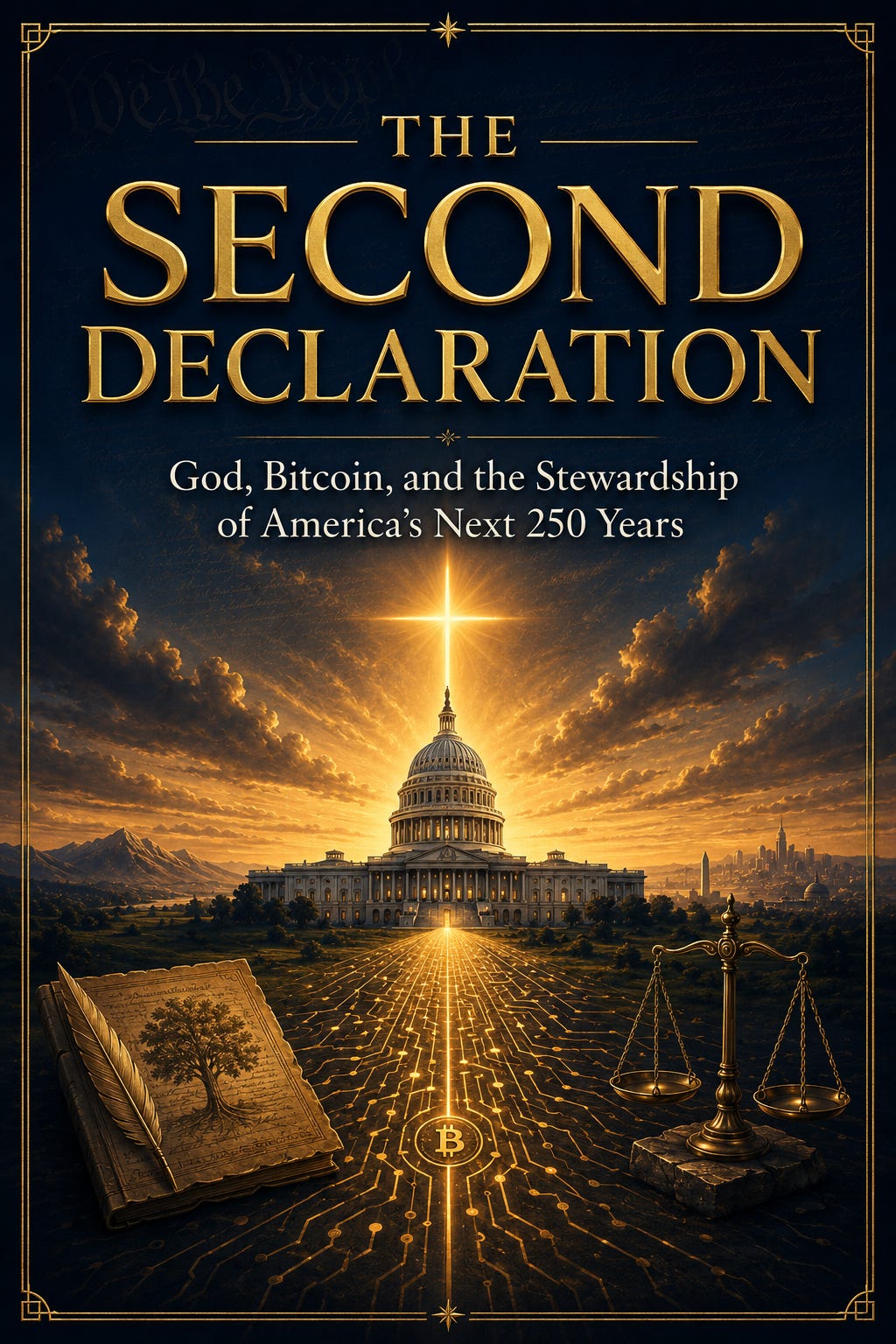
The scale in this chapter is not measuring grain, silver, or bitcoin. It is measuring assumptions. What does a system assume about the person holding power? What does it assume about the person managing money, interpreting law, approving risk, lending capital, leading a church, raising children, or governing a nation? If the measure of man is false, everything built upon that measure will eventually tilt.
The financial crisis of 2008 revealed that truth with painful clarity. The institutions at the center of the storm were filled with brilliant people. They had degrees, models, committees, regulators, ratings, projections, and language so sophisticated that ordinary families could barely understand the risks being taken in their name. The buildings were impressive. The confidence was immense. Yet beneath the surface, incentives had quietly bent behavior. Risk was packaged, disguised, multiplied, and transferred until the structure could no longer bear the weight placed upon it.
The losses did not remain on balance sheets. They walked into kitchens, layoff meetings, foreclosure notices, retirement accounts, and small businesses that had done nothing to create the crisis but could not escape its consequences. A father came home earlier than expected with a box from his desk. A mother opened a mortgage statement and felt the room tighten around her. A business owner who had paid employees faithfully for years wondered how to keep the doors open another month. The crisis was not merely a failure of math. It was a revelation of man.
That point must be made carefully. The people inside those institutions were not demons. Many were intelligent, sincere, hardworking, and convinced that the system around them made sense. That is what makes the lesson so sobering. You do not need monsters to create a catastrophe. You need fallen people inside systems that reward blindness, punish restraint, and distribute consequences unevenly.
Madison would have recognized the pattern. Not because he understood mortgage-backed securities, central banks, or global derivatives, but because he understood the human heart inside systems of power. Genesis would have recognized it too. The creature became the measure, and the measure began to bend.
This is where bitcoin enters the chapter with unusual force, not as salvation, but as architecture. Bitcoin assumes monetary authorities are not angels either. It does not make greedy people generous, reckless households wise, or proud nations humble. Only Christ can redeem the heart. But bitcoin is built around one profoundly Madisonian instinct: do not design money around the hope that those who control it will always restrain themselves when restraint becomes costly.
Bitcoin has no king.
That sentence sounds simple until one considers how much monetary history has depended on kings, treasuries, committees, central banks, chairmen, emergency powers, and private institutions acting as trusted centers. Sometimes those centers are led by wise people. Sometimes they are not. The deeper problem is not the character of any single person. The deeper problem is that centralized monetary systems repeatedly ask fallen people to exercise discipline precisely when pressure is greatest to abandon it.
Bitcoin changes the question. The old monetary question asked, who can we trust to govern the money well? Bitcoin asks whether money can be structured so that less trust is required in the first place. Its rules are public. Its supply is limited. Its network is distributed. Its verification is not dependent upon one office, one personality, or one emergency meeting. No committee can gather behind closed doors and vote more bitcoin into existence because the moment feels urgent.
That does not remove all risk. It removes a particular kind of trust.
A Constitution does not eliminate ambition. It structures power so ambition meets resistance. The Bitcoin network does not eliminate greed, fear, speculation, or human folly. It structures money so no single authority can alter the supply by decree. In both cases, the design acknowledges something true about human beings: when power can be abused, eventually someone will face the temptation to abuse it.
If monetary authorities were angels, bitcoin would not be necessary.
That line should not be heard as an attack on individuals. It is an argument about architecture. A wise system does not require perfect people in order to function. Madison understood that in government. Bitcoin reflects it in money.
This is also where Colossians gives the chapter its deepest answer. Paul writes that in Christ all things hold together. Every system needs a center. The Founders distributed power because no human center could bear godlike trust. Bitcoin removes the monetary center because no issuer should be treated as incorruptible. Christianity goes further. Creation does have a true center, but it is not Caesar, Congress, the Federal Reserve, Wall Street, or bitcoin. It is Christ.
That is not sentimental language. It is reality. Families, nations, markets, churches, and monetary systems begin to come apart when they detach freedom from truth. Every age tries to place something else at the center. Power. Progress. Wealth. Technology. Nation. Self. The substitute may work for a season, but it eventually asks more than it can give. Christ alone can bear the weight of ultimate trust because Christ alone is not fallen.
The inheritance we received from the Founders was not merely a set of freedoms. It was a disciplined way of thinking about power. They gave us systems built by men who understood sin more clearly than many modern leaders do. They understood that liberty requires more than inspiration. It requires limits. They understood that power should answer to power, law should answer to higher law, and rulers should remember they are not gods.
The Christian does not look at fallen systems with despair. We look at them with sobriety and hope. Sobriety, because we know why systems bend. Hope, because we know redemption does not depend upon pretending man is better than he is. The gospel tells the truth more deeply than any ideology. Man is made in God’s image, fallen in sin, and redeemable through Jesus Christ. That truth humbles every founder, banker, president, investor, pastor, parent, and citizen.
It also tells us why architecture matters but cannot save.
The Constitution cannot redeem the human heart. Bitcoin cannot sanctify the monetary imagination. A budget cannot make a family holy. A governance structure cannot make a leader humble. These things can restrain, order, reveal, and protect, but they cannot resurrect. The final answer to human fallenness is not better architecture alone. It is a better King.
That is why Jesus remains central to this book. Not as a devotional addition after the real argument has been made, but as the Lord over the entire argument. He is the true King who needs no checks and balances because His heart is not deceitful, His justice is not partial, and His authority is never corrupted by self-interest. Under every earthly system, even the best ones, we build with limits because human beings require them. Under Christ, the Kingdom rests upon righteousness that cannot decay.
Until that Kingdom comes in fullness, wisdom builds with human weakness in mind.
That is the lesson Madison left us. It is the lesson Genesis teaches at the beginning, Jeremiah speaks through the prophets, Paul explains in Romans, and Bitcoin strangely echoes in code: do not build systems that require fallen men to behave like angels.
The Founders built locks because they understood the house. Bitcoin has no king because it understands the mint. But America once had another monetary restraint, older than the Federal Reserve and closer to the Founders’ memory. When that restraint disappeared, the scale began to move.
That is where our story turns next.
Kingdom Principle 👑
Wise systems account for human weakness.
Scripture tells the truth about man: created in God’s image, fallen in sin, and in need of redemption. Faithful stewardship does not pretend people are angels. It builds accountability, limits, and honest structures that protect what God has entrusted.
Prayer 🙏
Heavenly Father, thank You for telling the truth about who we are. Thank You that we are made in Your image, yet not left to our own pride, ambition, or self-deception. Give us humility to recognize our weakness and wisdom to build with accountability.
Help us steward power, money, freedom, and responsibility with sober hearts. Guard us from trusting any human system more than we trust You. Teach us to value limits, pursue honesty, and build structures that serve people rather than exploit them.
Above all, keep our eyes fixed on Jesus Christ, the true King whose authority is righteous, whose heart is pure, and whose Kingdom cannot be corrupted. May everything we build point toward Him.
In Jesus’ name, Amen. 🙏📖⚖️₿🕊️👑