

By morning, the smoke had thinned but not disappeared. It lingered over the neighborhood in faint gray ribbons, caught between rooftops and trees, carrying the smell of sulfur, cut grass, and yesterday’s celebration. Cardboard tubes lay tipped over in driveways. A few spent sparklers rested in the gutter, blackened and bent. Small flags still stood in flowerpots and lawns, some leaning slightly after the night’s excitement, while larger flags moved quietly from front porches as if the country itself had exhaled.
Inside one house, the kitchen looked the way kitchens often look the morning after a holiday. A cooler sat by the back door, still damp around the edges. Paper plates had been stacked beside the sink. A child’s plastic flag lay on the table next to a grocery receipt, a church bulletin, and a laptop left open from the night before. The father who had carried his sleeping daughter inside after the fireworks now stood at the counter before anyone else was awake, drinking coffee that had gone lukewarm while he stared at the receipt.
The country had celebrated. The household still had to count.
That is not cynicism. It is life. The fireworks remember freedom. Stewardship preserves it. Celebration gives a people memory, but the morning after asks whether memory will become responsibility. A nation can be stirred by an anthem and still fail to order its life around the truth the anthem celebrates. A family can wave the flag on Saturday and avoid the hard conversations on Monday. The symbols remain beautiful, but symbols do not manage what has been placed in our hands.
Jesus understood that distinction better than anyone. In Matthew 25, He told a story about a master preparing to leave on a journey. Before departing, the master entrusted his servants with wealth. One received five talents, another received two, and another received one, each according to his ability. Then the master left, and the servants were alone with what had been placed in their hands. That is where the story becomes uncomfortable, because the test did not begin when the master returned. It began the moment he walked away.
Imagine the servants standing there after his departure. The road still carried the dust of his leaving. The household had become quieter. Each servant held a different amount, but each held the same kind of responsibility. The money was real, yet it was not ultimately theirs. They could touch it, count it, bury it, multiply it, fear it, or use it faithfully. The question was not whether they had received the same assignment. The question was whether each would be faithful with the assignment he had received.
One servant went to work. Another did the same. The third servant chose what must have seemed safest. He dug into the earth and buried what had been entrusted to him. He did not waste it in public disgrace. He did not gamble it away. He did not spend it on himself. He preserved it in the most fruitless way possible. When the master returned, the servant’s explanation sounded cautious, even prudent, but Jesus did not present caution as faithfulness. The servant had protected the talent from risk while also protecting it from purpose.
That parable belongs at the kitchen table.
It belongs where the grocery receipt sits beside the child’s flag. It belongs where a father opens a college savings account and realizes the numbers do not feel as sturdy as he hoped. It belongs where a mother sorts mail and notices that insurance, groceries, tuition, gas, and repairs seem to be moving in one direction while the household income struggles to keep pace. It belongs where a young couple wonders whether they are building margin or simply surviving another month in a system that keeps asking more of them.
This is where the national story becomes personal. Inflation is not an abstraction when it reaches the grocery cart. Debt is not a theory when a family delays a needed decision because the monthly payment would break the budget. The future is not a political slogan when parents sit awake after the house grows quiet and wonder what kind of country, economy, and faith their children will inherit. The morning after the fireworks brings the republic home, and it places the question of America onto the kitchen table.
That table is one of the most important places in the nation.
Not because it is grand. It is not. It may be scratched, crowded, sticky from spilled juice, or covered with school papers and bills. But it is where truth eventually arrives. Washington can spend money the household does not see until prices rise. Central banks can speak in language the household does not understand until the savings account buys less. Politicians can promise what the household will later be taxed to support. The family budget becomes a scale, and the scale rarely flatters anyone.
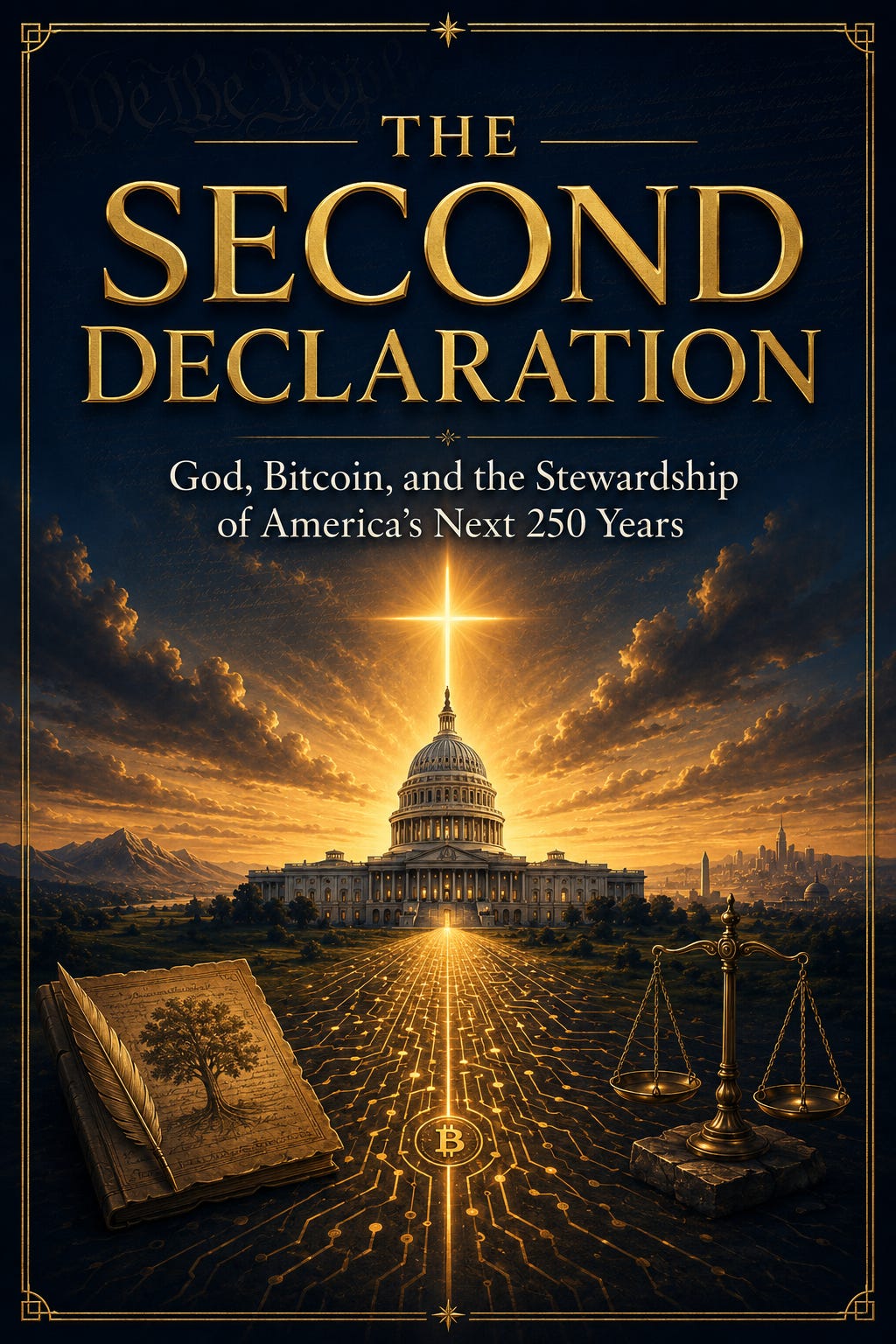
God cares about scales because He cares about truth. The scale in this chapter is not sitting in an ancient marketplace. It is sitting inside a spreadsheet, a bank app, a retirement statement, a tuition estimate, and a grocery receipt. It tells the truth about whether a household is preserving labor or consuming it. It reveals whether generosity has room to breathe. It exposes whether a family is making decisions from wisdom or fear. Numbers cannot save a soul, but they often reveal where a soul has avoided reality.
This is where written truth must become lived truth. The parchment in this chapter is not only the Declaration or the Constitution preserved beneath glass. It is the family Bible with names written inside the cover. It is the note a father leaves for his children explaining not merely where the accounts are, but what he believed about money, work, giving, and God. It is the household plan written down because love refuses to leave confusion behind. A nation can preserve its documents and still forget their meaning. A family can inherit a Bible and never open it. A Christian household can confess stewardship while leaving its financial life to drift.
James warns us not merely to hear the word, but to do what it says. That warning is tender and severe at the same time. Hearing without obedience creates an illusion of faithfulness. It allows a person to admire truth without being changed by it. The same danger exists in patriotism. We can admire liberty, sing about it, decorate for it, and speak warmly of the Founders while failing to practice the habits that allow liberty to survive in the next generation.
Patriotism is not what we feel when the anthem plays. It is what we build when the music stops.
That sentence may sound like a national statement, but it is first a household one. It is built in the decision to tell the truth about debt. It is built in the discipline to save before consumption expands to fill every available space. It is built in the courage to teach children that money is not merely for comfort, but for responsibility, generosity, and mission. It is built when a husband and wife refuse to outsource every difficult decision to institutions, algorithms, advisors, or emergencies.
This is also where bitcoin must be handled carefully. For a Christian household, bitcoin should not enter the conversation first as a price chart, a headline, or a speculative opportunity. It should enter, if it enters at all, as a question about faithful management. What is money doing to the fruit of our labor? Who controls the supply of the currency in which we save? Can our savings carry value honestly into the future? Are we prepared to custody what we own, or have we confused convenience with responsibility?
Those questions should not be asked with hype. They should be asked with humility. Bitcoin is not a substitute for wisdom, budgeting, generosity, emergency savings, debt reduction, or prayer. It is not a shortcut around character. It is not a magic door into wealth. It is, however, a monetary instrument that forces households to ask whether the systems they trust are preserving labor or quietly consuming it. That question belongs at the table before it belongs on a trading app.
The household is where hype dies and stewardship begins.
A father does not need slogans when he is thinking about his children. A mother does not need financial theater when she is trying to plan faithfully. Children do not need parents who chase every trend. They need parents who tell the truth, seek wisdom, and build with patience. If bitcoin has a place in a Kingdom household, it must be ordered under stewardship, not greed. It must serve faithfulness, not replace it.
Jesus said that to whom much is given, much will be required. That is one of the most sobering sentences in Scripture for any generation that has inherited freedom, Scripture, technology, opportunity, and wealth beyond what most of history could have imagined. We are not accountable for receiving less or more than someone else. We are accountable for what we do with what reached our hands. The servant with one talent was not judged for having one. He was judged for burying it.
Families can bury what they inherit. Nations can do the same. We can bury freedom under entertainment, responsibility under distraction, conviction under comfort, and truth under sentiment. We can preserve the appearance of faithfulness while refusing the work that faithfulness requires. The master in the parable was not looking for servants who admired his wealth. He was looking for servants who understood his trust.
The work is often ordinary. A budget reviewed honestly. A debt confronted before it becomes a chain. A giving plan discussed before generosity becomes an afterthought. A family Bible opened because faith must be taught, not assumed. A custody plan created because assets without instructions can become confusion for those left behind. A child taught that work is dignified, money is moral, and freedom is not permission to live without limits.
These are not small things. They are the architecture of the future.
Nations are not carried forward only in capitals. They are carried forward in households where people decide what faithfulness looks like when no crowd is watching. They are carried forward by parents who teach more than opinions, by churches that form disciples rather than consumers, by citizens who understand that liberty without character becomes appetite. The health of a republic is eventually measured in the habits of its homes.
After the July 4th celebrations have ended, the streets still carry traces of fireworks, and the porch flags still move in the morning air, but ordinary life has returned. Ordinary life is where the real assignment waits. No anthem covers the silence. No fireworks distract from the bills on the table. No crowd cheers when a family chooses discipline over impulse, clarity over avoidance, or faithfulness over ease.
The servants in Jesus’ parable eventually heard footsteps. The master returned. That detail matters because every assignment moves toward accountability. What we hold is not ultimately ours, and what we do with it is not hidden forever. Households give an account. Leaders give an account. Nations give an account. Generations give an account.
The question is not whether we loved the celebration. The question is whether we understood what the celebration required.
Outside, the flag still moves in the morning air. Inside, the receipts, passwords, bank statements, Bible, and children’s drawings sit on the same table. That is where the future begins to take shape, not only in halls of government, but in households deciding what faithfulness will look like before the next celebration comes.
The Founders understood that emotion alone could not preserve liberty. They knew a nation would need structure strong enough to carry conviction beyond the heat of a single moment. They knew freedom would require architecture. That is where our story turns next.
Kingdom Principle 👑
Celebration without stewardship becomes nostalgia.
God entrusts gifts to be cultivated, not merely admired. Freedom, money, family, opportunity, and truth all require faithful management. The test of gratitude is not what we celebrate in public, but what we steward in private.
Prayer 🙏
Heavenly Father, thank You for the inheritance You have placed in our hands. Thank You for freedom, family, work, opportunity, and the responsibility to steward what others sacrificed to preserve.
Teach us to be faithful after the celebration ends. Give us wisdom at the kitchen table, courage in our financial decisions, humility in our planning, and clarity in what we pass to our children. Help us become doers of Your Word, not hearers only.
May our households reflect Your truth. May our stewardship bless future generations. And may everything we build point beyond ourselves to the Kingdom of Jesus Christ, where every gift is rightly ordered under Your authority.
In Jesus’ name, Amen. 🙏📖⚖️₿🕊️👑