

On July 4, 2276, a child will stand in Washington, D.C., between marble and memory.
She may stand somewhere near the National Mall, where monuments rise like witnesses and the long story of the republic is carved into stone. The Capitol will still look toward the people it was built to serve. The Lincoln Memorial will still sit in solemn watch, reminding future Americans that a nation founded in liberty once had to bleed until it became more honest about what liberty required. The Washington Monument will still point upward, wordlessly confessing that even the greatest earthly leaders stand beneath Heaven. Somewhere nearby, the Archives will still guard old parchment behind glass, fragile pages that outlived the men who wrote them.
She will not know our names, but she will live inside our decisions.
That is the burden and beauty of inheritance. The future does not arrive as an abstraction. It arrives as a child standing beneath a sky we helped shape, speaking a language we helped preserve, worshiping in churches we either strengthened or neglected, inheriting systems we either repaired or allowed to decay. She will not know the sound of our voices, the anxieties of our elections, the price of our groceries, the temptations of our technologies, or the prayers whispered over our families in the dark. To her, we will be ancestors, flattened by time into a generation called 2026.
Then something sealed long before her birth will be opened.
It may be a time capsule, a letter, a record, or some artifact of a nation trying to speak across centuries. The objects inside will tell her what we believed was worth preserving. Some will look ordinary. Some will seem quaint. Some may make her smile. Others may make her ask how a generation could see so clearly in one area and so poorly in another. That is the humility every generation must accept. We do not control how the future will read us. We only control what we leave for it to read.
Washington, D.C. is the right place for this final vision because Philadelphia birthed the Declaration, but Washington carries the burden of whether we lived by it. The capital is where ideals become laws, where laws become systems, and where systems either serve people or consume them. It is a city of marble and ambition, prayer and politics, memory and contradiction. It is where a nation repeatedly discovers that founding words are not self-executing. They must be carried, defended, corrected, and submitted again to truth.
The people who loved this country most did not live only for their own age. They kept looking beyond the horizon. Washington would never meet us. Lincoln would never meet us. The mothers who buried sons would never meet us. The pastors who preached courage, the abolitionists who demanded America mean what it said, the fathers who saved quietly, the mothers who prayed when no one saw them, all of them sent something forward. They were not perfect, but the best among them understood that faithfulness is often measured by what reaches people whose names we will never know.
We are those people.
We are also becoming those people for someone else.
Moses understood this better than most men ever have. At the end of his life, he climbed the mountain and looked toward the land God had promised. He saw it from a distance, spread before him like a future he had carried but would not enter. He had confronted Pharaoh, endured wilderness complaints, received the Law, interceded for a stubborn people, and led Israel for forty years toward a promise that would belong to others. His calling was faithfulness, not possession.
That scene is almost too painful to read quickly. Moses sees the land, but his feet will not touch it. He sees the inheritance, but he will not build a house there. He sees the future, but he cannot control it. This is the deep ache of stewardship. The faithful often labor for harvests that will ripen after they are gone. They plant what others will eat. They pray for children whose children they may never hold. They build altars in the wilderness so that another generation might remember God in the land.
Hebrews tells us of men and women who lived by faith, seeing promises from a distance and greeting them from afar. They did not receive everything they longed for in their own lifetime, yet they acted as though the unseen future was real. Faith gave substance to what had not yet appeared. That is the spiritual posture every steward must learn. We are not asked to possess every outcome. We are asked to be faithful with the assignment.
A faithful person thinks in grandchildren.
Not only biological grandchildren, though they matter deeply. A faithful person thinks in spiritual descendants, civic descendants, households not yet formed, churches not yet planted, and children who will inherit the consequences of decisions made before they could speak. Biblical inheritance is not measured only by what reaches the bank account. It is measured by what reaches the soul of the third generation. Treasure can bless a household, but truth teaches treasure how to serve.
The greatest inheritance is truth, because truth teaches every other inheritance how to serve.
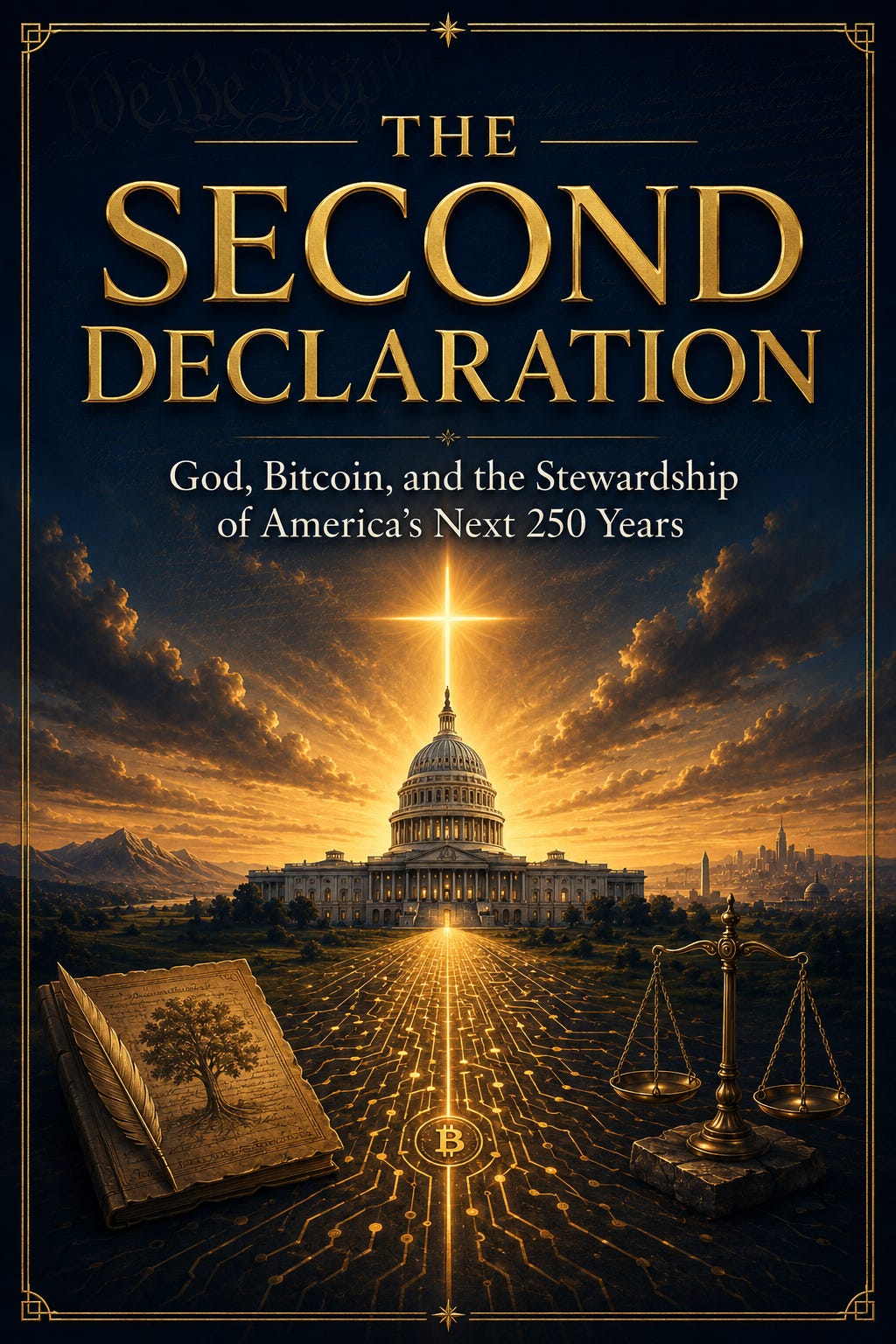
That is the final convergence of this book. The parchment, the scale, and the inheritance were never separate themes. They were different ways of asking whether truth would travel faithfully through time. The parchment preserves what a generation believes to be true. The scale reveals whether a generation measures honestly. The inheritance shows whether a generation loved the future more than its own appetite.
If we could write one letter to the Americans of 2276, it should not begin with self-congratulation. It should begin with humility. We inherited more than we deserved. We enjoyed freedoms purchased by people we never met. We lived in a time of extraordinary abundance and deep confusion. We held tools of astonishing power, yet often lacked wisdom equal to them. We argued loudly, consumed easily, forgot quickly, and still found mercy waiting whenever we turned back toward God.
But humility is not the same as weakness. The final chapter of this book cannot end with a generation shrugging its shoulders and saying it tried. The times require something stronger. Let the child in 2276 find that in 2026 we chose truth over comfort, stewardship over consumption, freedom over control, honest money over hidden theft, and faith over fear. Let her find that we did not merely understand the moment. We answered it. We repented where the scale had bent, repaired what neglect had weakened, taught what forgetfulness had buried, and prayed for people whose names we would never know.
The next 250 years will not be preserved by choosing appetite over control or control over appetite. Capitalism without conscience can decay into consumption, reducing human beings to consumers and calling excess freedom. But as socialism creeps into our fabric it is a spiritual danger before it is an economic one. It trains people to surrender responsibility in exchange for promises of provision. It teaches the young to look first to the state rather than to God, family, church, work, and neighbor. It baptizes dependency as compassion and disguises coercion as care. A nation that forgets God will eventually ask government to become god, and no government can bear that weight without crushing the people beneath it. The answer is not greed with a flag or control with a moral vocabulary. The answer is freedom under God, ordered by truth, restrained by virtue, protected by honest money, and directed toward stewardship.
Bitcoin, at its best, is not a rebellion. It is a repentance toward honest money.
This is where bitcoin belongs in the final chapter, but only in its proper place. Bitcoin is not the inheritance. Honest money is part of the inheritance. It is a refusal to accept hidden dilution as normal. It is a witness that the scale matters, that labor should be carried honestly through time, and that monetary power should not be treated as though fallen men can be trusted with angelic authority.
That does not make bitcoin ultimate. It does not make it holy. It does not make it immune from foolishness, greed, pride, or misuse. It simply places a question in front of our generation that we can no longer avoid: will the money we pass forward tell the truth? The answer matters because money carries more than purchasing power. It carries work, sacrifice, generosity, savings, wages, memory, and promises made to children who will need those promises to mean something when they arrive.
The future will weigh us. It will ask whether we measured truthfully. It will ask whether we preserved honest money, limited power, strengthened households, taught our children, guarded faith, and resisted the temptation to trade inheritance for ease. It will ask whether we left behind assets without wisdom or wisdom capable of disciplining assets. It will ask whether we handed future Americans freedom with virtue or freedom emptied of meaning.
Those questions should not crush us. They should clarify us.
A faithful generation leaves truth, not merely treasure.
A parent understands this instinctively at the edge of a child’s bed. The house has grown quiet. The day’s noise has softened. A father pauses at the doorway and watches his daughter sleep, aware that she trusts him without knowing how heavy trust can be. A mother pulls a blanket over her son and wonders what sort of world will form him when her voice is not near enough to guide him. In that moment, America is not an abstraction. The economy is not an abstraction. Education, faith, money, law, and culture are not abstractions. They are the weather in which our children will grow.
We write to the future with more than words. We write with prayers. We write with habits. We write with what we repair and what we ignore. We write with what we teach, what we tolerate, what we celebrate, and what we refuse to surrender. We write with budgets, bedtime prayers, church attendance, family meals, custody plans, honest work, repentance, generosity, courage, and the quiet decisions that never become headlines but eventually become history.
This is why the final parchment is not only a letter to 2276. It is the life we live now. A document can tell the future what we believed. Our systems will tell them what we practiced. Our debts will tell them what we postponed. Our children will tell them what we taught. Our churches will tell them whether we sought first the Kingdom of God or merely borrowed His language to bless our preferences.
Jesus must have the final word because only Jesus can bear the final hope. America is a stewardship. Bitcoin is a tool. The Kingdom is eternal. That order matters because every earthly inheritance, even the best one, remains temporary. Nations rise and fall. Technologies emerge and fade. Markets change. Constitutions are tested. Families grow, grieve, and pass from one generation to another. But the Kingdom of God does not depend upon our custody, our votes, our bank accounts, or our inventions.
Revelation does not end with an empire, a market, a treasury, a central bank, or a technology. It ends with a city whose light is the glory of God, where the Lamb reigns, where truth is no longer contested, and where nothing corrupt enters to distort what God has made whole. That future is not buried in Washington waiting to be opened. It is held by God, secured by Jesus, and promised to His people. The Kingdom cannot be inflated, seized, corrupted, frozen, or forgotten.
That eternal inheritance does not make earthly stewardship less important. It makes it rightly ordered. Because the Kingdom is eternal, we can serve a temporary nation without worshiping it. Because God owns the future, we can labor for people we will never meet without needing to control the outcome. Because Jesus is King, we can use tools without becoming servants of them. Because truth is His, we can refuse to hand the future a lie.
So let this be our letter.
To the Americans of 2276,
We did not know your names, but we knew you were coming. We did not see your faces, but we understood that our choices would one day live in your world. We inherited a nation founded on the truth that rights come from God, not government. We inherited a Constitution built to restrain power, a Bill of Rights written to protect the individual, and a memory of honest money that earlier generations had nearly forgotten.
In our time, the scale had bent. Debt had grown. Freedom had often been confused with appetite, and compassion had often been confused with control. Many trusted systems they did not understand, consumed more than they preserved, and called normal what should have been examined. But God was merciful. He awakened many of us to truth, and truth demanded stewardship.
We remembered that liberty requires virtue. We remembered that money should be honest. We remembered that ownership requires responsibility. We remembered that inheritance is not only what reaches your hands, but what reaches your soul. We became faithful where it mattered most: we remembered truth, repaired what we could, and refused to hand the future a lie.
If you are reading this in freedom, give thanks to God before you give thanks to us. If you are reading this in difficulty, do not confuse difficulty with abandonment. Faithfulness is still possible. If children stand near you, tell them where rights come from. Tell them why truth matters. Tell them that power must be limited, money must be honest, ownership must be responsible, and freedom must be stewarded. Tell them that Jesus is King over every generation.
The God who guided 1776 still governed 2026, and He governs 2276.
We wrote from a time of uncertainty, but not without hope. We leave you what we can. May you leave better.
The Founders wrote to us with parchment and ink. We write to the future with the lives we live, the systems we build, and the truths we refuse to surrender.
Kingdom Principle 👑
A faithful generation leaves truth, not merely treasure.
Truth is the inheritance that teaches every other inheritance how to serve. Wealth, freedom, technology, and opportunity become blessings only when governed by faith, wisdom, honest measurement, and obedience to God.
Prayer 🙏
Heavenly Father, thank You for the inheritance we have received and for the generations who carried truth before us. Teach us to be faithful with freedom, family, money, responsibility, and faith.
Help us leave more than possessions. Help us leave wisdom, courage, humility, and a clear witness to Jesus. May our children and grandchildren know where rights come from, why truth matters, and how to steward what You place in their hands.
We pray for generations whose names we will never know. May they find us faithful. May they inherit truth, not confusion, and courage, not fear. Above all, may they know You, love You, and seek first Your Kingdom.
In Jesus’ name, Amen. 🙏📖⚖️₿🕊️👑